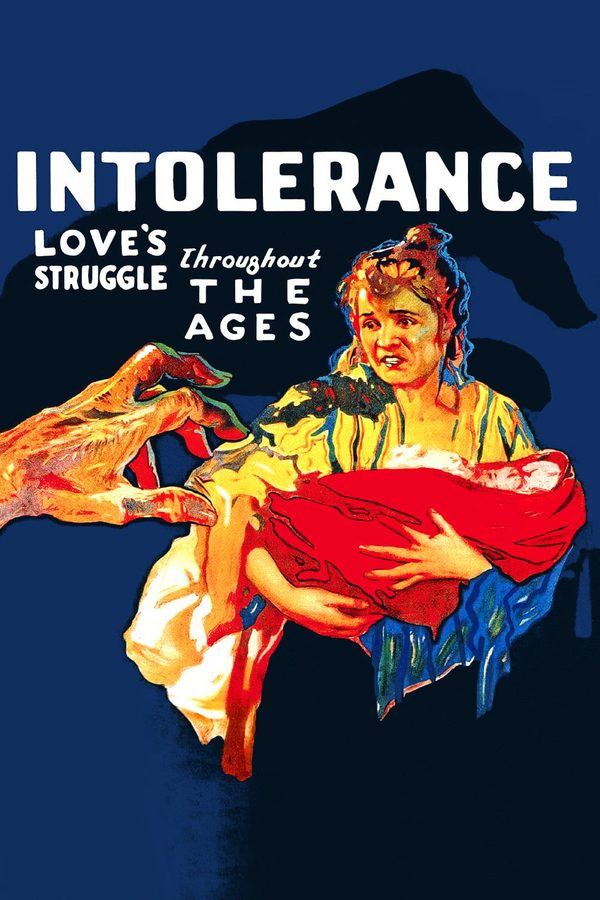
Intolerance: Love's Struggle Throughout the Ages (1916) on Netflix
A pay cut and a crushed strike send the Dear One and the Boy to another city. Three other tales of intolerance unfold in Babylon, Judea and 1572 Paris.
- Netflix3.2/5
- IMDb7.6/1018,157 votes
- Rotten Tomatoes98%
Trailer

Plot summary
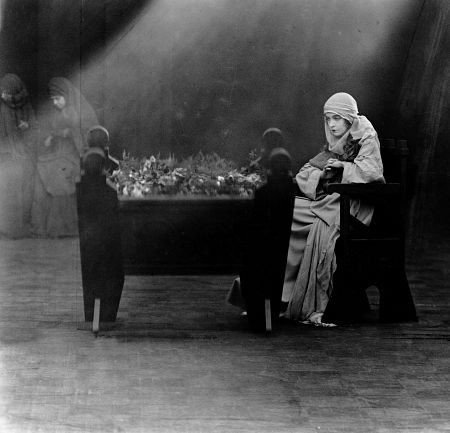
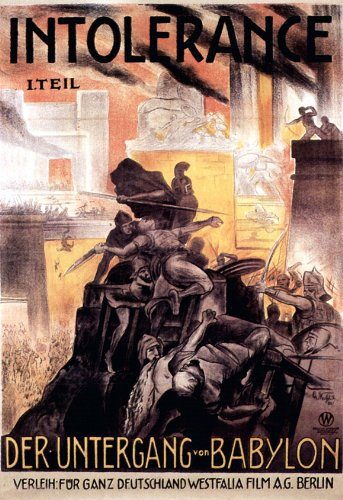
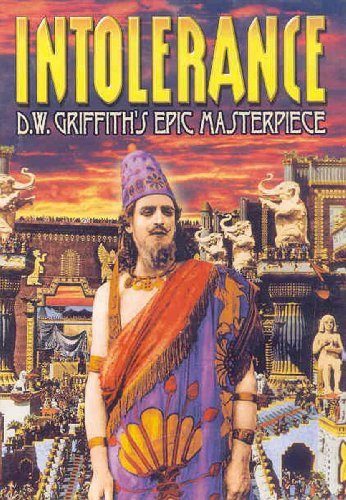
Four storylines unfold together, each set in a different era and each turning on intolerance. In Babylon, the Mountain Girl is caught up in the rivalry between the followers of Bel-Marduk and Ishtar as Prince Belshazzar faces Cyrus the Great of Persia. In Judea, Pharisees refuse the Nazarene's message of love, and a wedding is held at Cana. In 1572 Paris, Brown Eyes and Prosper Latour prepare for their wedding while the Catholic royal house plans against the Protestant Huguenots. In modern America, a mill owner cuts his workers' wages to fund his sister's charities, and the strike that follows is crushed; the Dear One and the Boy depart for a new city, where she lives in poverty. Between the stories, a figure of Eternal Motherhood rocks a cradle.
Cast








- Erich von Ritzauas First Pharisee (Judean Story)





Did you know?!Facts and trivia about Intolerance: Love's Struggle Throughout the Ages (1916)
Can contain spoilers, watch the movie first.
- D. W. Griffith made Intolerance partly in answer to the NAACP and others who condemned his earlier film The Birth of a Nation for glorifying the Ku Klux Klan; he said he had nothing to apologize for and intended the film as a rebuttal to his critics.
- Intolerance was reported to have cost close to $2 million in 1916, including $250,000 for the Belshazzar feast scene alone, but the film's accounts show the exact cost was $385,906.77.
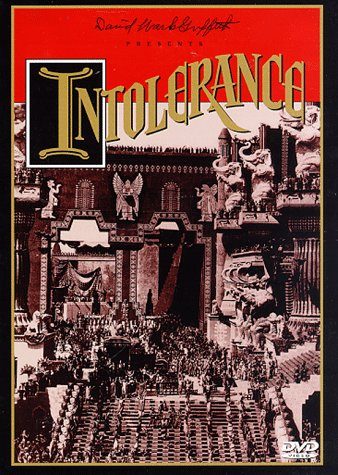
- More than 3,000 extras worked on Intolerance, which built a Babylon set with 300-foot walls plus streets of Judea and medieval France on its Sunset Boulevard lot; the extras' payroll reportedly reached $12,000 a day.
- Cameraman Karl Brown was barred from the set the day a Babylonian harem scene with full frontal nudity was filmed, apparently because he was so young, and the scene he described does not survive in any version of the film.
- Film historian Kevin Brownlow wrote that when Griffith re-released the Modern Story separately in 1919 as The Mother and the Law, he softened the National Guard's actions in the film because of that year's First Red Scare.
- Erich von Stroheim, Tod Browning and Woody Van Dyke were among the assistant directors Griffith used on Intolerance who went on to become noted Hollywood directors, and its unorthodox editing influenced European and Soviet filmmakers.
- In 1989 Intolerance was selected for the Library of Congress's National Film Registry, which deemed it culturally, historically or aesthetically significant, in the registry's first year of voting.