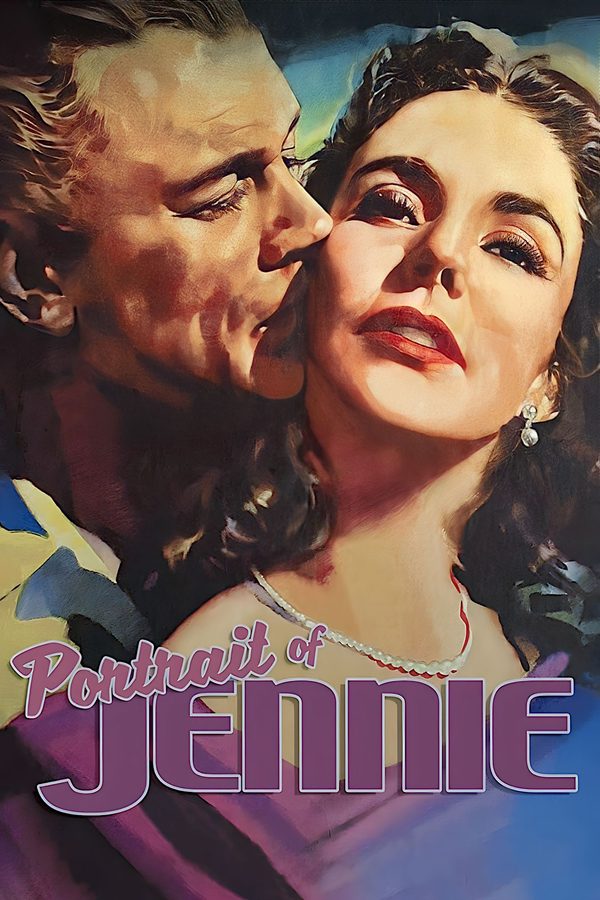
Trailer

Plot summary
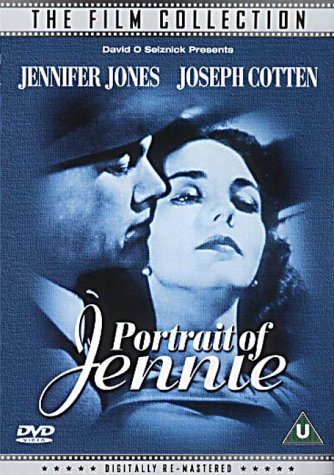
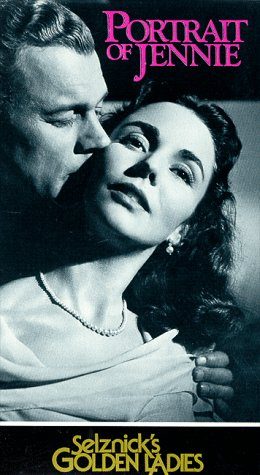
In 1934 New York, Eben Adams paints for a living and barely manages it. Miss Spinney, an art dealer who once bought a canvas from him, tells him his pictures lack feeling, though she admits to her partner that she sees promise in his work. In Central Park, Eben meets Jennie Appleton, a young woman dressed in the fashion of an earlier time, and afterward draws her from memory. She reappears to him from time to time, and between those meetings she seems to grow up far faster than anyone could. She speaks of long-ago events as though they were still going on. Eben comes to love her.
Cast
- Maude Simmonsas Clara Morgan


Did you know?!Facts and trivia about Portrait of Jennie (1948)
Can contain spoilers, watch the movie first.
- Producer David O. Selznick was so unhappy with the initial footage of Portrait of Jennie that he ordered re-shoots and hired and fired five different writers before the film was finished, taking from early 1947 to October 1948 and pushing the budget to $4,041,000.
- Cinematographer Joseph H. August shot many of the film's scenes through a canvas using old lenses from the silent-film era so they would resemble actual paintings; he died shortly after finishing the film and was posthumously nominated for an Academy Award for his work.
- A filmed picnic scene between Jennie and Eben was cut because Jennie's hair appeared to blend into a tree behind her, and a separate scene of Jennie dancing to choreography by Jerome Robbins took more than ten days to shoot but never made the final cut at all.
- The score wove in Bernard Herrmann's eerie theremin-driven 'Jennie's Theme,' the same instrument previously heard in Hitchcock's Spellbound and Wilder's The Lost Weekend, even though Herrmann had originally been hired to compose the whole score and left partway through the film's unusually long shoot.
- Despite Portrait of Jennie being a fantasy, Selznick insisted on shooting at real locations like Massachusetts's Graves Light, Central Park, The Cloisters and the Metropolitan Museum of Art, which sharply drove up costs, and he later had the ending re-shot with a tinted color sequence, presenting the final shot of the painting itself in three-strip Technicolor.
- The title painting of Jennie was actually created by artist Robert Brackman, and it became one of David O. Selznick's most treasured possessions, hanging in his home after he married the film's star, Jennifer Jones, in 1949.