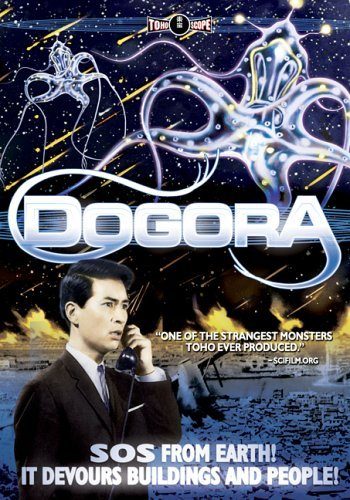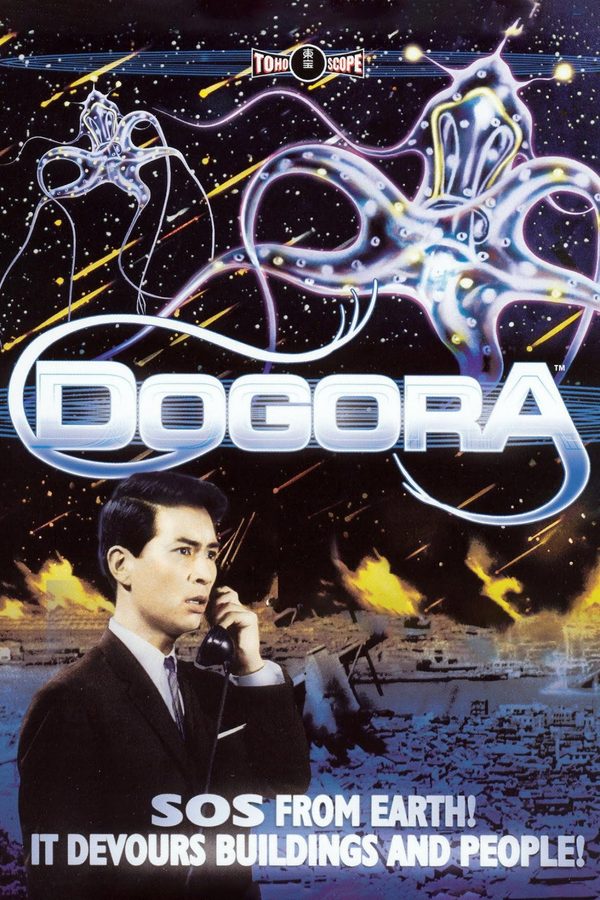
Dogora (1964) on Netflix
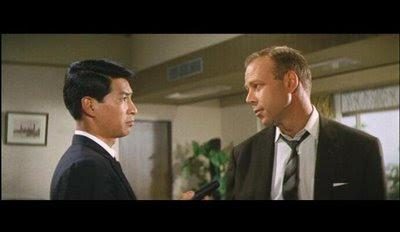
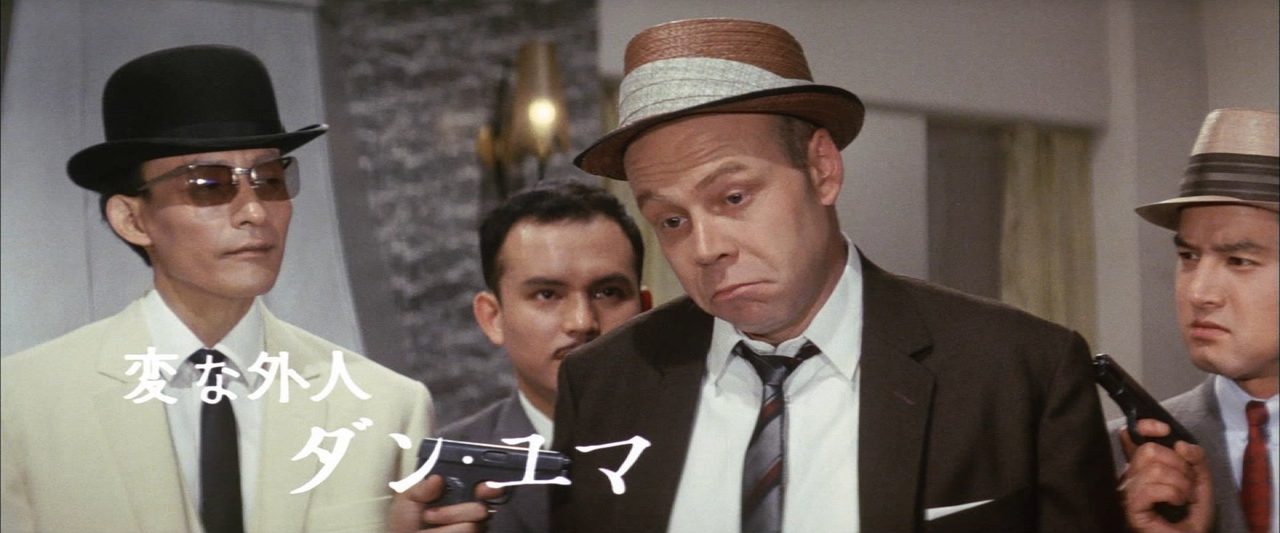
Television satellites disappear above Japan. Inspector Komai's hunt for missing diamonds brings him to the crystallographer Dr. Munakata and to Mark Jackson, a self-proclaimed diamond broker.
- Netflix2.8/5
- IMDb5.6/101,193 votes
- Rotten TomatoesNot available
Trailer

Plot summary
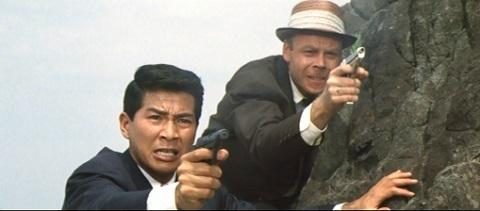
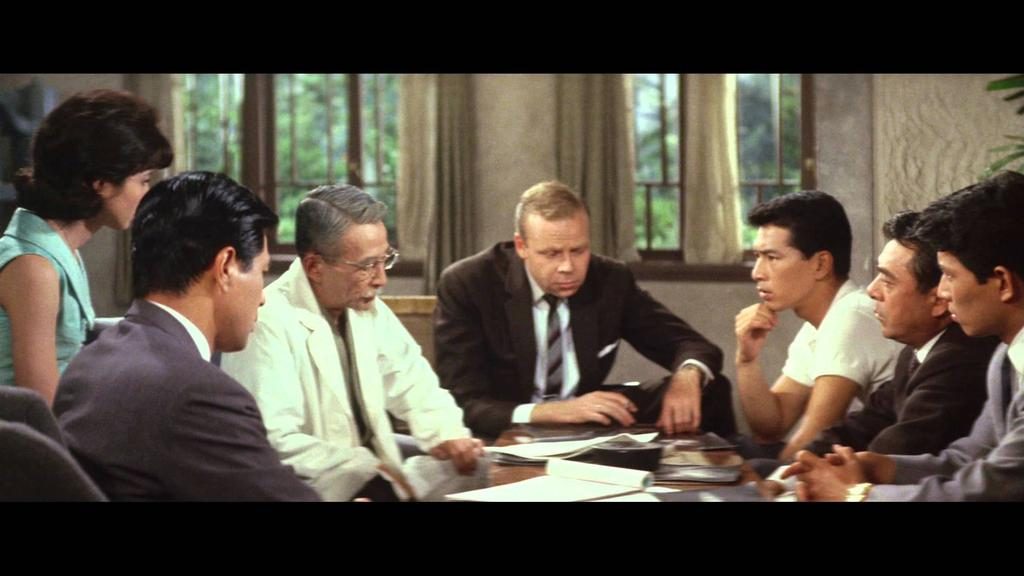
Diamonds vanish in unexplained disappearances across the globe, and Inspector Komai's inquiries bring him to the crystallographer Dr. Munakata. Satellites from the Electric Wave Laboratory have also stopped transmitting above Japan, and investigators link their loss to unidentified space cells. Looking for Mark Jackson, a self-proclaimed diamond broker, Komai finds him at Munakata's home, where gangsters knock Komai out and take Jackson away to question him. Komai regains consciousness in the company of Munakata and the lab assistant Masayo Kirino. He walks Masayo home and meets her brother Kirino, who works at the Electric Wave Laboratory. The three see sparking clouds and an unseen force pull coal from a factory into the sky. Munakata suggests the sparks may be a form of carbon.
Cast












Did you know?!Facts and trivia about Dogora (1964)
Can contain spoilers, watch the movie first.
- Toho had planned to release a sequel to King Kong vs. Godzilla titled Continuation: King Kong vs. Godzilla in the summer of 1964, but when that project failed to materialize, Dogora, which already had a completed script, was selected at the last minute and pushed into production.
- According to Teruyoshi Nakano, the water from the local Waterworks Bureau was white and cloudy on the day of filming, so the crew could barely keep the tank clear and shot very little footage of the Dogora prop. As a result, the creature's full jellyfish-like form appears only briefly in one sequence, though it was heavily featured in marketing.
- Dogora's sound effects were made by capturing the sounds of clams with a special respiratory sound pickup microphone. Those sounds were later reused for the Lady Guard alarm in Invasion of Astro-Monster (1966) and for the monsters Alien Baltan and Bullton in Ultraman.
- Because the Dogora prop risked breaking if suspended on piano wire like Toho's usual props, Keizo Murase put it in a tank of water and manipulated it with fishing line. Effects director Eiji Tsuburaya was pleased they had finally found a method that worked.
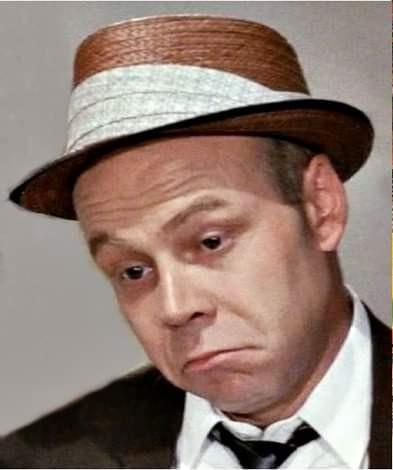
- Toho sent actor Robert Dunham to Hollywood to negotiate a distribution deal for Dogora and drum up interest in a spin-off series about his character Mark Jackson. The offer was a lowball, Dunham says, and the series died because he wasn't a name actor and his dubbed performance was hard to judge.
- Dogora's single-celled form, the state the creature mostly appears in on screen, was made by sandwiching liquid organic glass between plates of solid glass. For the crystallizing effect, a light bulb was attached to a 15 centimeter polyvinyl chloride miniature and lit by an electrical current through piano wire.