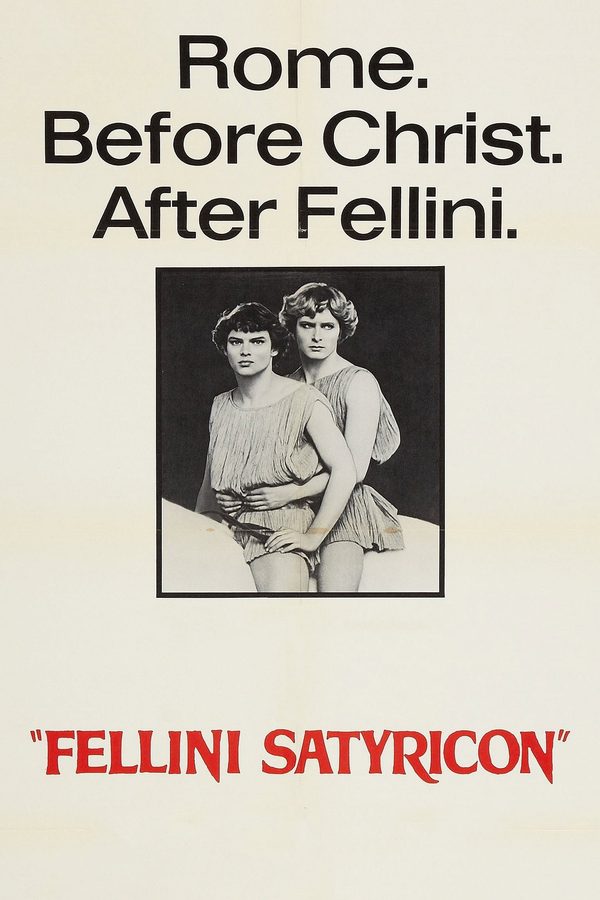
Fellini Satyricon (1969) on Netflix
In first century Rome, the student Encolpio loses the boy Gitone to his roommate Ascilto. An earthquake interrupts his despair, and he begins a journey through a surreal city.
- Netflix3.1/5
- IMDb6.8/1018,340 votes
- Rotten Tomatoes76%
Featurette

Plot summary
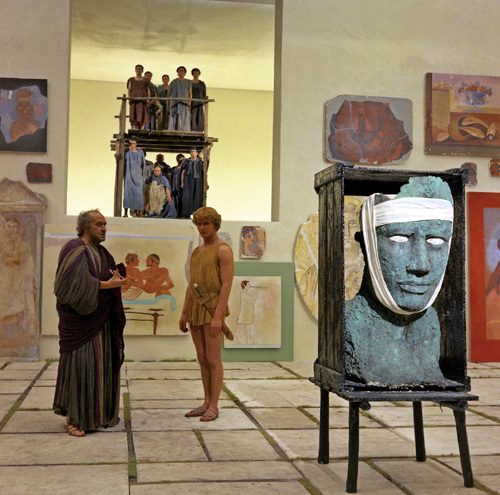
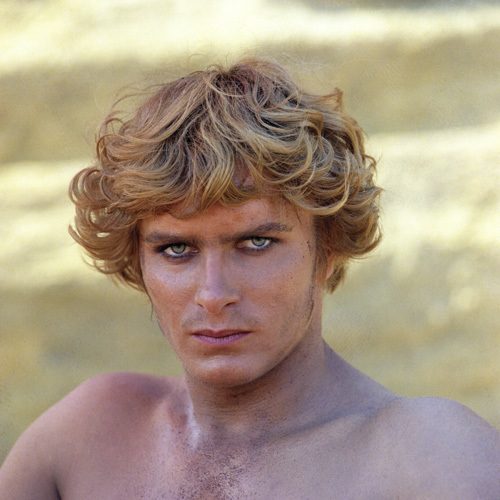
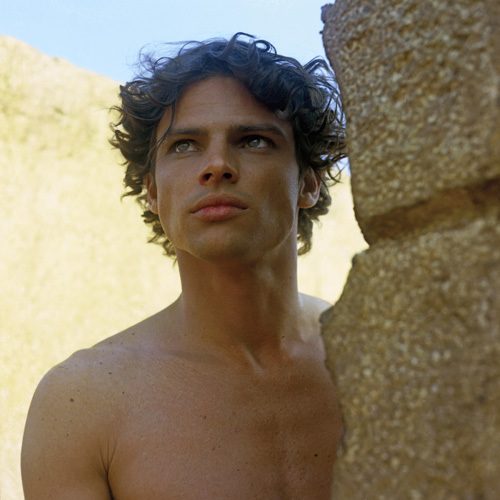
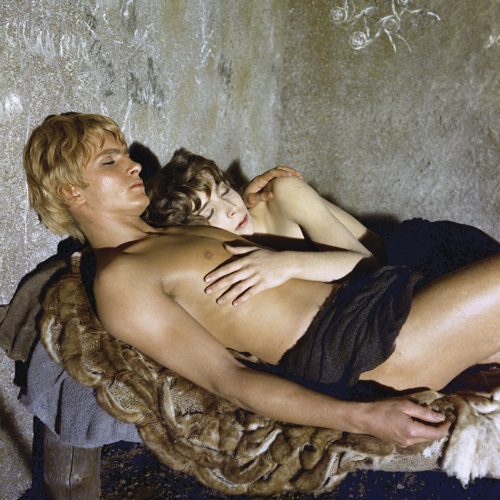
Encolpio, a student in first century Rome, shares a room with Ascilto, and both are attached to the boy-slave Gitone. When Ascilto takes the boy away, Encolpio tracks him to the baths and learns that Ascilto has sold Gitone to Vernacchio, an actor who runs a theater. Encolpio interrupts a performance to confront Vernacchio and recovers the boy with the help of a magistrate. The two walk home, but a magistrate follows them, so they hide in a brothel and slip out a back door. At the apartment, Ascilto returns and the two argue, then agree to divide their belongings. Gitone is allowed to choose whom he stays with, and he picks Ascilto. Encolpio is crushed, but an earthquake destroys the building. He then meets the poet Eumolpus, who takes him to a banquet at the villa of Trimalchio.
Cast


Did you know?!Facts and trivia about Fellini Satyricon (1969)
Can contain spoilers, watch the movie first.
- Fellini's film faced a rival Satyricon: producer Alfredo Bini had registered the title in 1962 and hired Gian Luigi Polidoro to direct his own version. When Fellini's producer Alberto Grimaldi sued to stop it and lost, Fellini's picture was retitled Fellini Satyricon to distinguish it.
- Co-screenwriter Bernardino Zapponi noted that Fellini used a deliberately jerky form of dubbing so the dialogue fell out of sync with the actors' lips, matching his intention of invoking a distancing effect.
- Fellini Satyricon shot its cavern sequences below the Roman Colosseum, one of several real locations that also included Fiumicino, Latina and the Pontine Islands.
- While recuperating from a debilitating illness in 1967, Federico Fellini reread Petronius's Satyricon and was struck by its missing parts, which left large gaps between episodes. He was encouraged by the text's fragmentary nature to go beyond recreating the past and create a dreamlike atmosphere.
- At its Venice screening, the film got a five-minute ovation from the normally reserved press corps, and festival tickets that usually cost 2,000 lire ($3.20) were sold on the black market for 60,000 lire (about $100) apiece.