Trailer
Plot summary
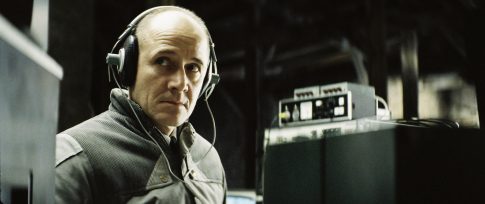
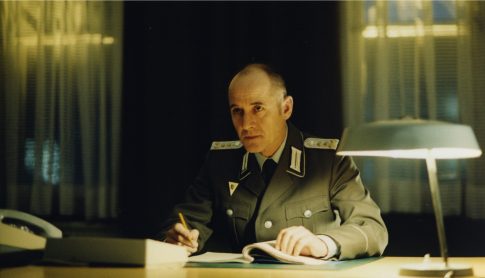
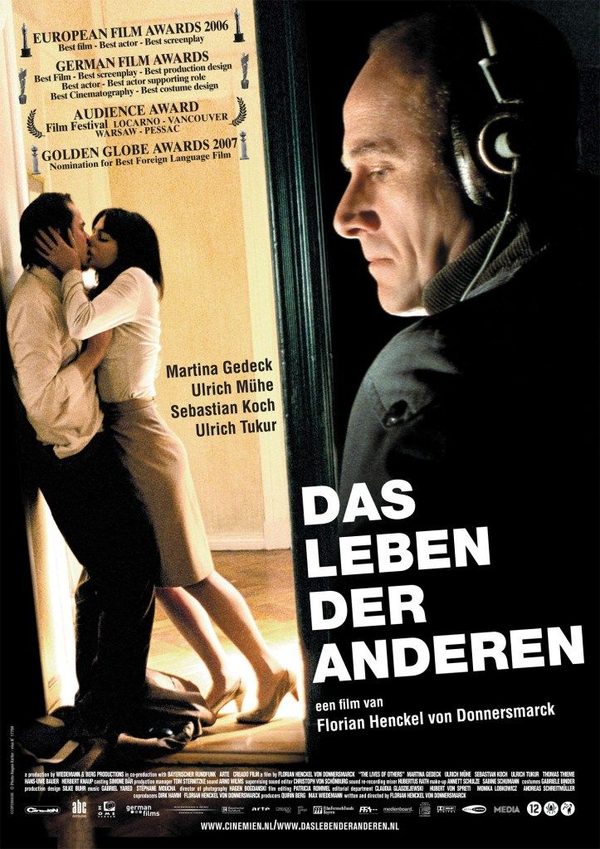
The Lives of Others is at once a political thriller and a human drama. The film opens in East Berlin in 1984 with a sequence that alternates scenes from an interrogation with scenes from a training class for aspiring officers of the Stasi, or secret police. Stasi Captain Gerd Wiesler (Ulrich Mühe), code name HGW XX/7, is demonstrating his interrogation technique using audio of his own interrogation of a suspect. Wiesler instructs the students on how to tell whether a subject is lying. A student asks a question that Wiesler judges to be a bit too compassionate (read "bourgeois"), and the professor marks the student's name on the attendance record: surely this student has just flunked the course, or worse. During the feature's first thirty minutes, writer/director Florian Henckel von Donnersmarck draws a portrait of Wiesler that borders on caricature: Wiesler is a highly skilled officer of the Stasi, a proud, zealous, disciplined and entirely cold-blooded professional. He is one of the many cogs in the wheel of "the System," working anonymously and tirelessly, convinced that his efforts are building a better Socialist society.
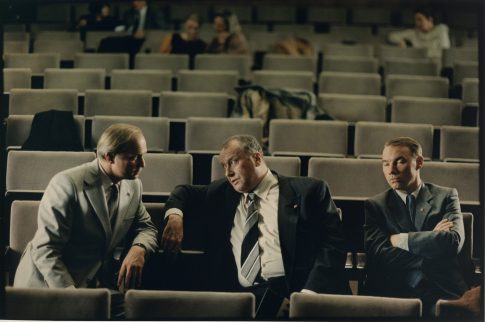
At the end of the class, Lieutenant-Colonel Anton Grubitz (Ulrich Tukur), Wiesler's old school friend (and probably his only friend), who has risen to the position of head of the Culture Department at Stasi, comes to invite Wiesler to a theatrical premiere.
Cast














Show all 20 cast










Did you know?!Facts and trivia about The Lives of Others (2006)
Can contain spoilers, watch the movie first.
- Hubertus Knabe, director of the Hohenschönhausen prison memorial, refused Florian Henckel von Donnersmarck permission to shoot the film's opening scene there because he objected to making the Stasi man into a hero, and met the director's Schindler's List comparison with the reply: "There was a Schindler. There was no Wiesler."
- Florian Henckel von Donnersmarck and Ulrich Mühe were successfully sued for libel over an interview in which Mühe said his second wife, the actress Jenny Gröllmann, had informed on him to the Stasi through their six-year marriage; 254 pages of government records detailed her activities, though her Stasi controller later said he had made up many of the file's details.
- German author Christoph Hein says the film is loosely based on his life story: Donnersmarck interviewed him in 2002 and put his name in the opening credits, but Hein, finding the film's events unlike his own experience, asked for the name to be deleted.
- In September 2014, 43 members of the Israeli elite clandestine Unit 8200 wrote to Israel's prime minister and army chief refusing further service, and one of them named a viewing of The Lives of Others as "the transformational moment".
- Florian Henckel von Donnersmarck wrote the treatment for the film in a couple of hours after imagining a man with earphones on, listening in to what he takes for an enemy of the state but really hearing beautiful music that touches him; the screenplay was written during a long stay at his uncle's monastery, Heiligenkreuz Abbey.
- Released 17 years after the fall of the Berlin Wall, The Lives of Others was the first notable drama film about East Germany after a run of comedies such as Good Bye, Lenin! and Sonnenallee.
- The Lives of Others set a new record with 11 nominations for the Deutscher Filmpreis and won seven of the awards, among them best film, best director, best screenplay, best actor and best supporting actor.