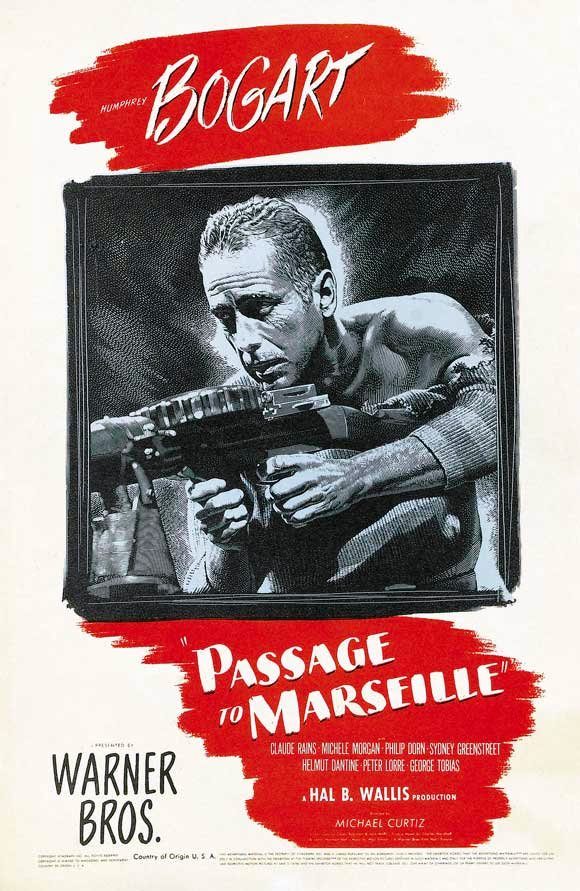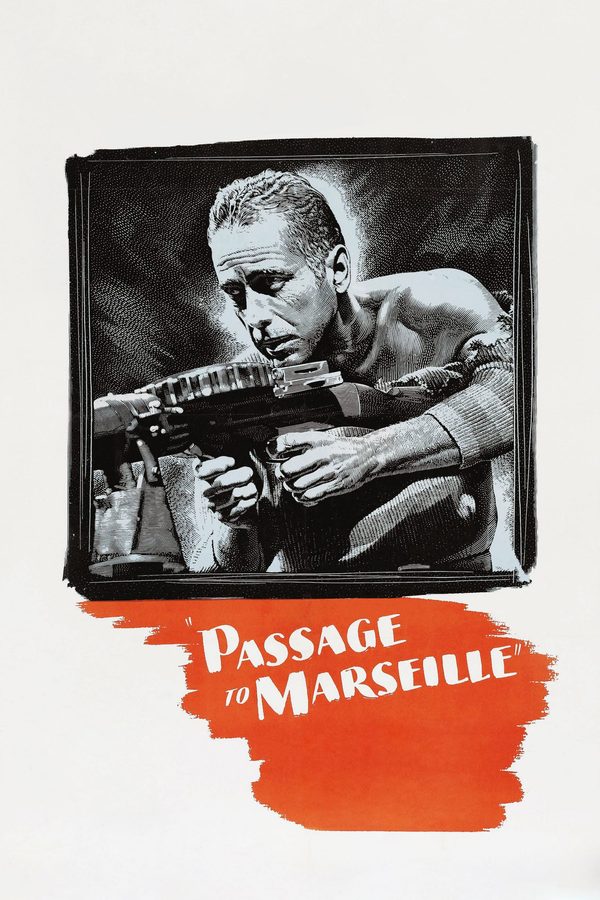
Passage to Marseille (1944) on Netflix
Passed19441h 49mAdventureDramaRomance
At a British airbase, a journalist's attention fixes on Jean Matrac, a French gunner. A newspaper publisher framed for murder, he escaped Devil's Island to fight for a free France.
- Netflix3.4/5
- IMDb6.8/105,750 votes
- Rotten Tomatoes67%
Trailer

Plot summary
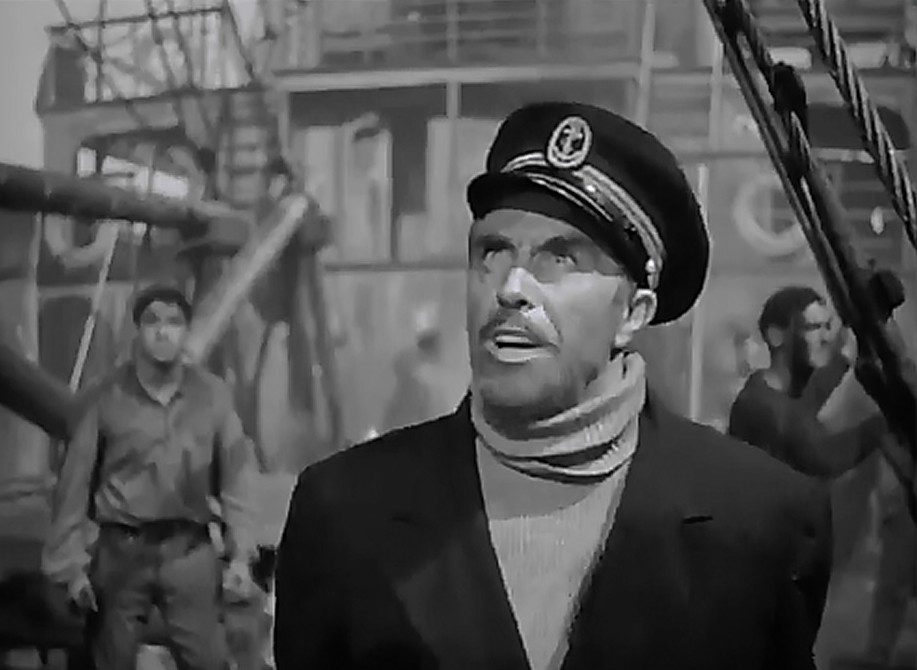
In 1942 the journalist Manning arrives at a British airbase to report on the Free French airmen battling Germany. With Captain Freycinet he watches bomber crews ready themselves for a raid, and his attention settles on Jean Matrac, a gunner. Freycinet tells him that two years before, the tramp steamer Ville de Nancy, under Captain Malo, had picked up five men drifting in a canoe in the Caribbean. Matrac, with Marius, Garou, Petit and Renault, claimed to be French-Venezuelan miners eager to fight for their homeland, then admitted they had broken out of the prison colony on Devil's Island. A patriotic former convict, Grandpère, had chosen Matrac to head the escape. Matrac was a newspaper publisher who had spoken out against the Munich Pact and faced a false murder charge for it.
Cast




Did you know?!Facts and trivia about Passage to Marseille (1944)
Can contain spoilers, watch the movie first.
- Humphrey Bogart's starring role as Matrac was nearly lost after he refused Jack Warner's demand that he appear in Conflict; with pre-production already six months old, Jean Gabin was touted as a replacement.
- A scene in which Humphrey Bogart's Matrac machine-guns the defenseless crew of a downed German bomber was cut by censors from foreign releases of the film.
- Warner Bros. paid $75,000 for the novella the film was based on, written by Mutiny on the Bounty authors Charles Nordhoff and James Norman Hall, an astronomical sum for a book property in those days.
- The film's flying sequences use Boeing B-17 Flying Fortress bombers rather than the Martin B-26 Marauder medium bombers the Free French actually flew, because the B-17 was recognizable to American audiences.
- Although the film called for exotic locales, James Wong Howe shot the principal photography at the Los Angeles County Arboretum and Botanic Garden in Arcadia, California.