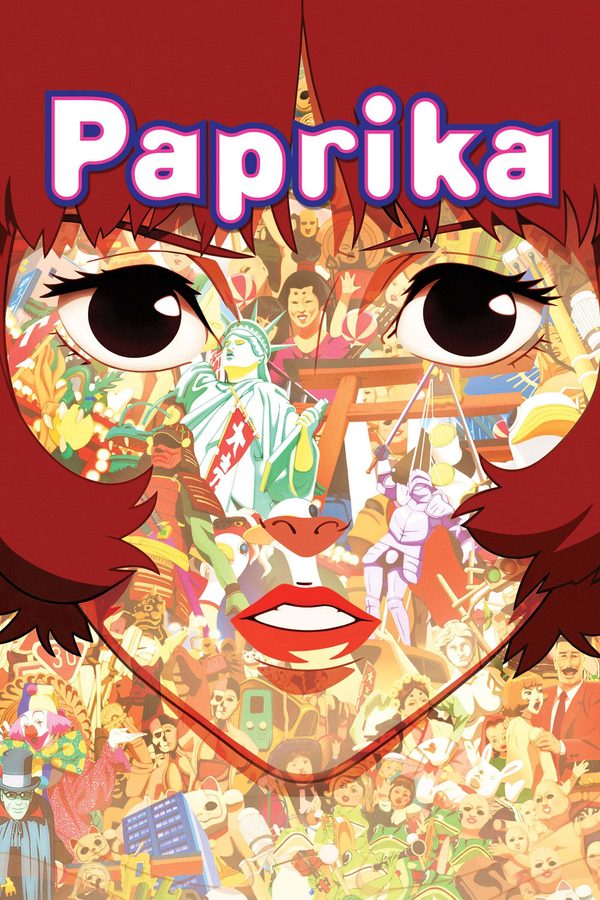
Paprika (2006) on Netflix
R20061h 30mAdventureAnimationCrime
Dr. Atsuko Chiba treats patients by entering their dreams as Paprika, her detective alter ego. When DC Mini prototypes are stolen, a thief uses the device on people while they are awake.
- Netflix3.6/5
- IMDb7.7/10115,848 votes
- Rotten Tomatoes87%
Trailer

Plot summary
At the Institute for Psychiatric Research a team has built the DC Mini, a device that lets users view other people's dreams. One of them, Dr. Atsuko Chiba, uses it without permission to treat psychiatric patients outside the facility, appearing in their sleep as her alter ego, a detective called Paprika. Three prototypes go missing, and the thief turns the device on people while they are awake, filling their minds with dreams that are not their own. Dr. Toratarō Shima, the department chief, and Dr. Kōsaku Tokita, who invented the DC Mini, work alongside Atsuko. The chairman, Dr. Seijirō Inui, opposes the machine, and Paprika's patient, the detective Toshimi Konakawa, keeps returning to a recurring dream.
Cast














Did you know?!Facts and trivia about Paprika (2006)
Can contain spoilers, watch the movie first.
- Critics and scholars have noted striking similarities between Paprika and Christopher Nolan's 2010 film Inception, including plot, scenes and characters, arguing it was influenced by Paprika, with some accusing Nolan of stealing Satoshi Kon's idea.
- Hirasawa's soundtrack was one of the first film scores to use Vocaloid, with Lola as the voicebank, and it was the last of his albums composed using an Amiga computer, sequencing all MIDI through an Amiga 4000.
- Kon planned Paprika as his next film after Perfect Blue with a producer from its financing company, but the project was ruined when that company, Rex Entertainment, went bankrupt.
- Kon believed the novel Paprika could not be adapted into one film because it was too long and over a decade of creators had already used its ideas, so he simplified it and wove in ideas from Tsutsui's other works.
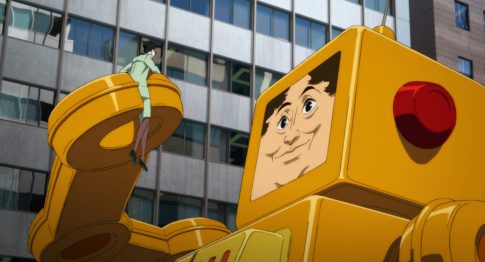
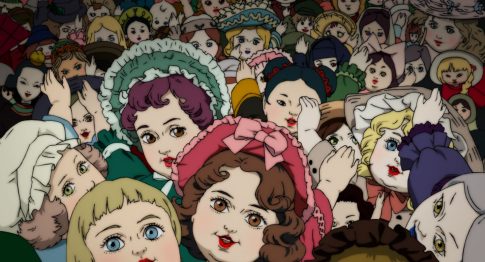
- The nightmare parade of inanimate objects was not in the novel; Kon invented it because the film's length made showing many different dreams difficult, so he chose one symbolic image recognizable as a nightmare.
- Kon had the idea for Paprika as early as 1998, and his earlier films Perfect Blue and Millennium Actress explored illusion/reality and memory/reality because he wanted to visually capture a dynamic like the novel Paprika.
Stills


Similar movies