My American Uncle (1980) on Netflix
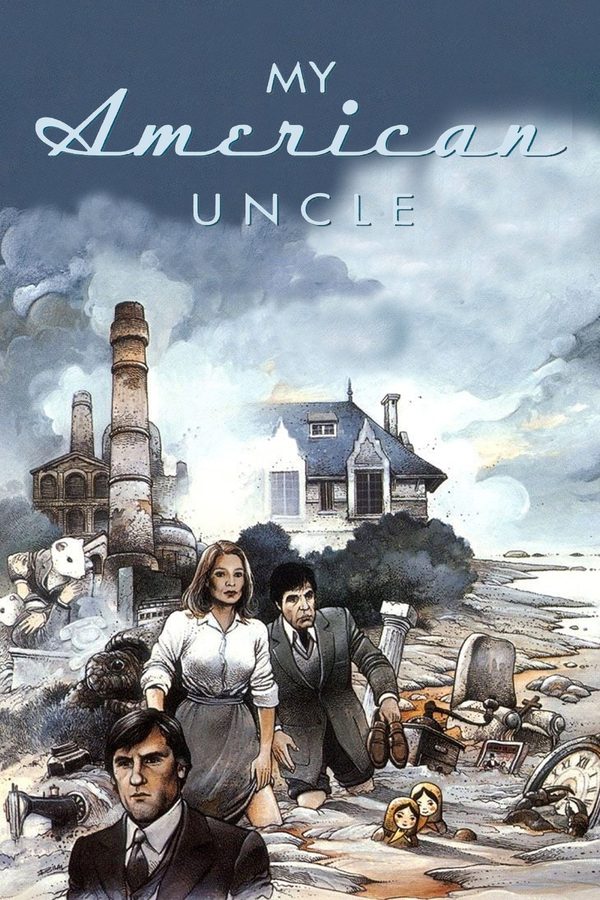
A scientist sets out his ideas on behavior through three lives. René Ragueneau works at a textile factory, Janine Garnier is a fashion adviser, and Jean Le Gall is in politics.
- Netflix4.1/5
- IMDb7.6/107,443 votes
- Rotten Tomatoes86%
Trailer

Plot summary
A scientist introduces the physiology of the brain and sketches his own background, and the stories of three fictional characters unfold beside his account. Jean Le Gall comes from a comfortable middle-class family on a Breton island in the gulf of Morbihan and goes into radio and politics. Janine Garnier grows up with left-wing working-class parents in Paris, leaves home to act, and later works as a fashion adviser. René Ragueneau turns from his farming family's old-fashioned ways in Torfou and takes an executive post at a textile factory in Lille.
Cast









- Bernard Malaterreas Le père de Jean




Did you know?!Facts and trivia about My American Uncle (1980)
Can contain spoilers, watch the movie first.
- Alain Resnais first met Henri Laborit, the surgeon and neurobiologist, when Laborit — an admirer of Resnais's Last Year at Marienbad — asked him to make a short documentary about a memory-enhancing drug for a pharmaceutical laboratory. That film was never financed, but the two men decided to try a feature mixing documentary and fiction.
- The epilogue ends with the camera creeping towards Alan Sonfist's mural The American Forest on a half-demolished Bronx building until the image disintegrates into fragments of paint on a single brick. Resnais said he wanted to show the brain's impossibility of understanding things completely.
- The budget was too small for extensive studio filming, so Alain Resnais used existing locations that were often completely transformed — a bank was turned into the broadcasting offices.
- Resnais shot the three fictional stories in advance and separately from Henri Laborit's contributions, not yet knowing what Laborit would say; some very long shots were filmed so that Laborit's words could be added later.