Trailer

Plot summary
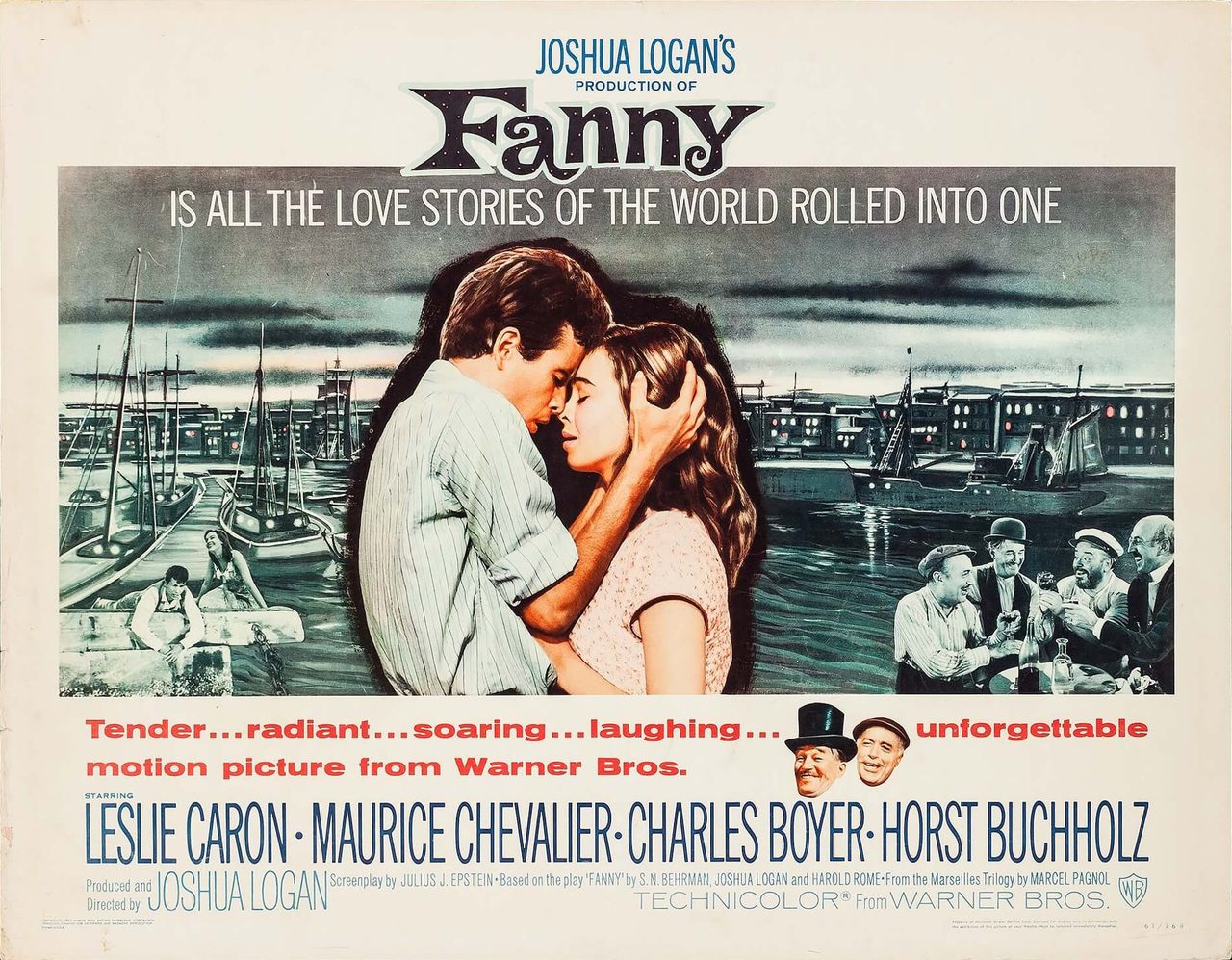
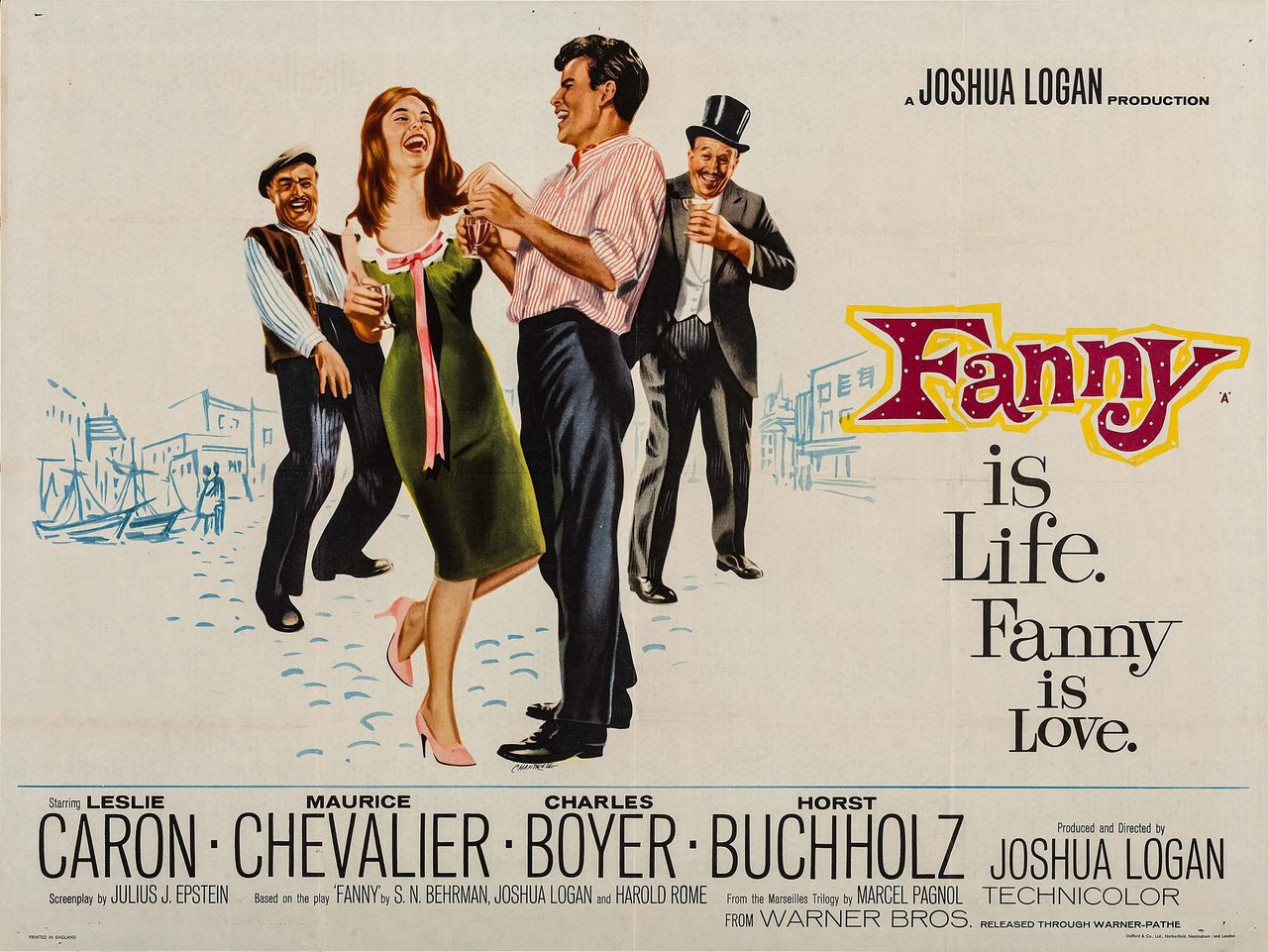
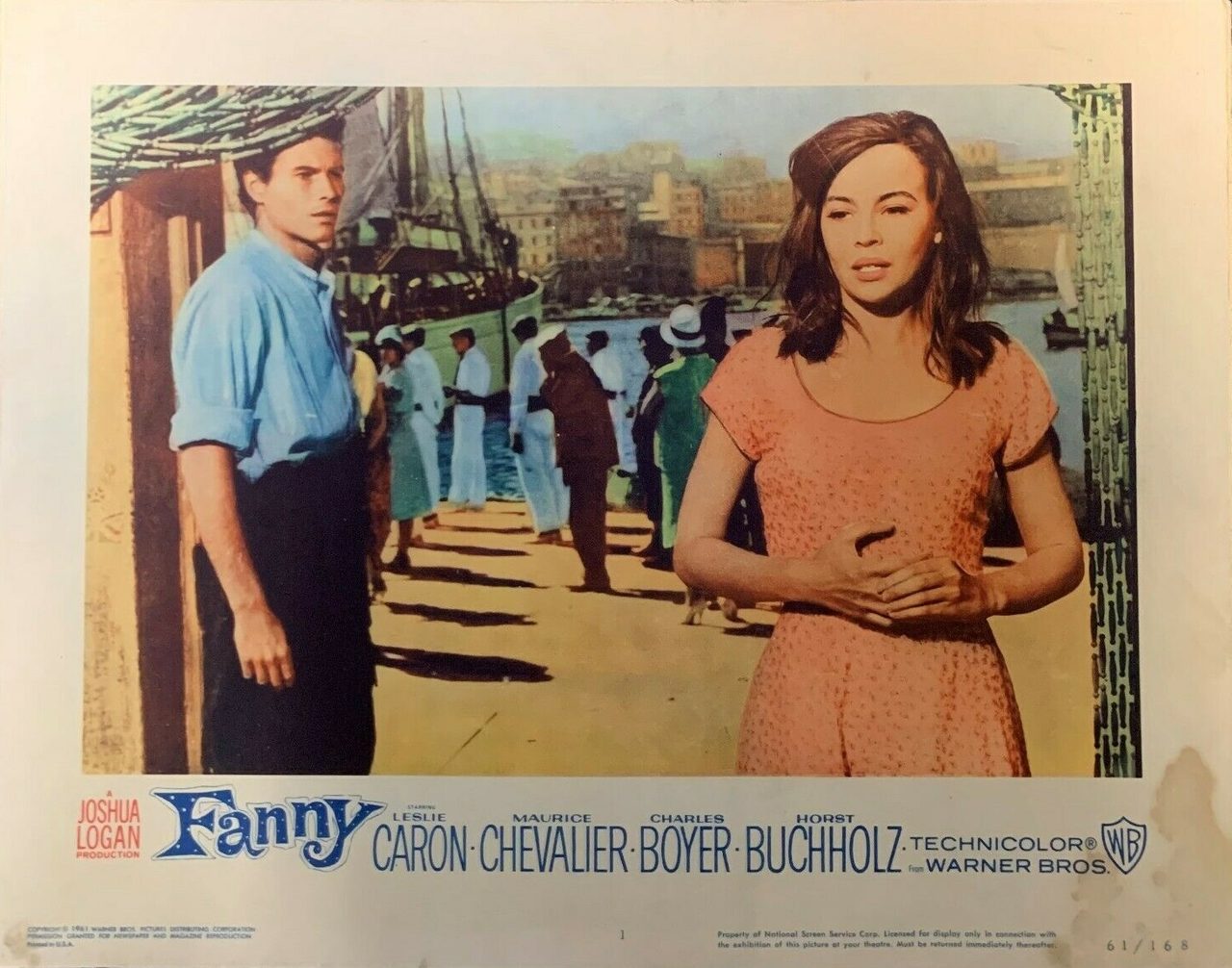
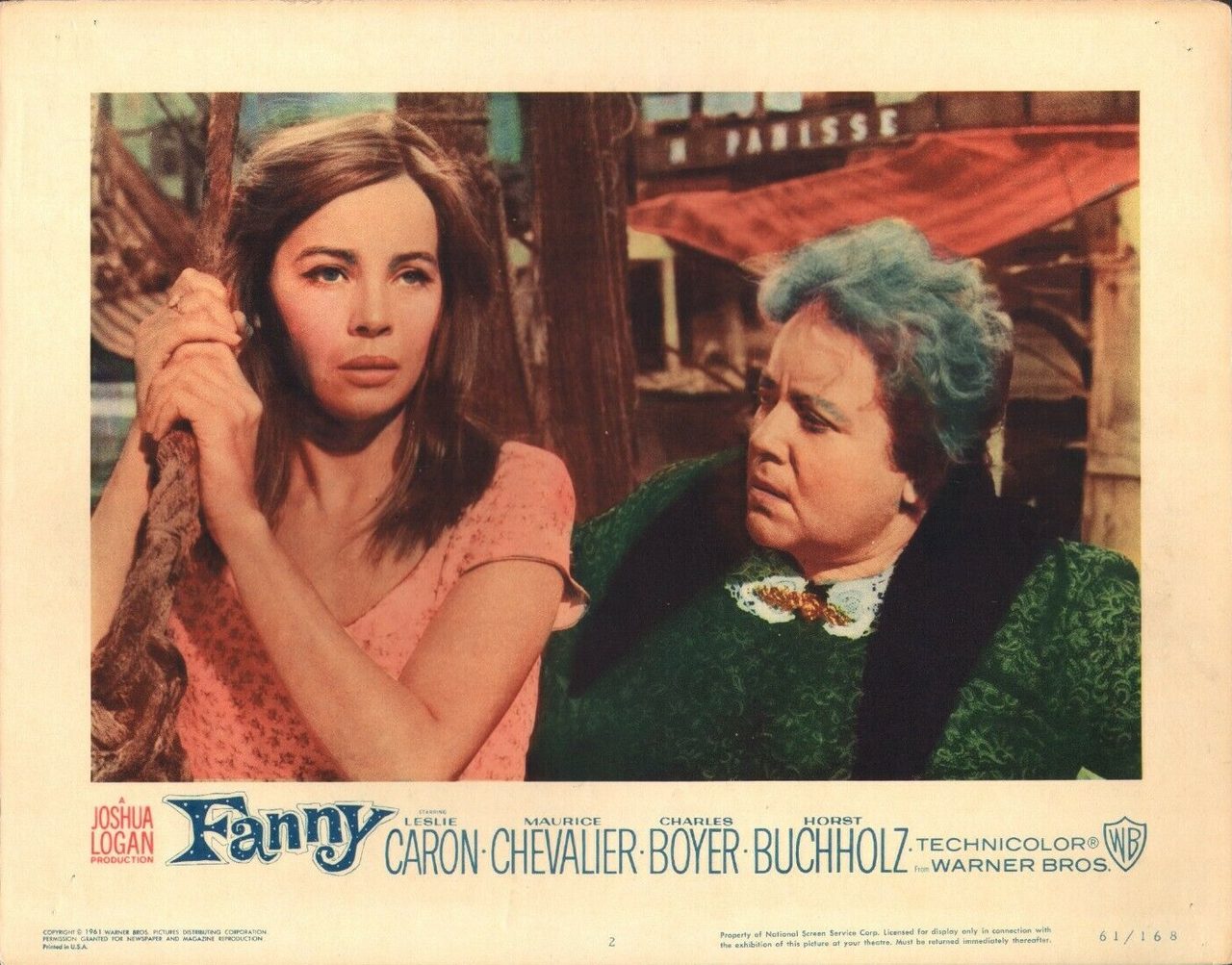
In Marseille in the early 1920s, César runs a bar where his 18-year-old son Marius works. Marius is restless there and wants a life at sea. Fanny, also 18, sells fish at the waterfront with her mother Honorine and has loved Marius since childhood, though he keeps turning her away. Marius has enlisted, without telling her, on a research voyage that will circle the globe, and he sails the next day. Fanny asks him to a Sunday-night dance, and he refuses. Panisse, a widowed older merchant, asks to meet Honorine; he wants to marry Fanny, and though Honorine is disappointed, she does not object, since he is worth 600,000 francs. Fanny tells Marius she turned Panisse down because she loves him; Marius answers that he will be away five years.
Cast








- Joël Flateauas Cesario (Fanny's Son)




Did you know?!Facts and trivia about Fanny (1961)
Can contain spoilers, watch the movie first.
- Audrey Hepburn agreed to play Fanny but had to decline because of prior commitments; Leslie Caron, assuming the French would dislike an English-language version of Pagnol, was hesitant to replace her but accepted three weeks before shooting began.
- Charles Boyer had refused the part when it involved singing, because he would neither sing nor allow his voice to be dubbed; he gladly accepted the role when that was no longer necessary.
- Jack L. Warner bought the screen rights to the stage musical but, convinced that musical films were losing popularity, decided to cut all of its songs from the adaptation.
- Screenwriter Julius J. Epstein, who had worked with Joshua Logan on Tall Story, first turned down adapting Fanny because he found Marius' motive for leaving Marseille hard to believe; Logan solved it through Marius' relationship with his father.
- As the film's release neared, art house cinemas booked the original Pagnol films as a last chance to see them; Warner's purchase of the screen rights then removed those films from circulation for decades.
- The film was to be called Joshua Logan's Fanny, but that title was scrapped after reporters pointed out its double meaning.