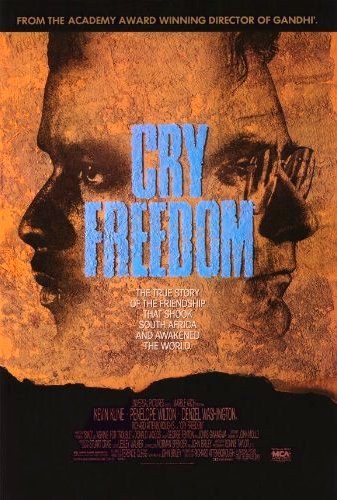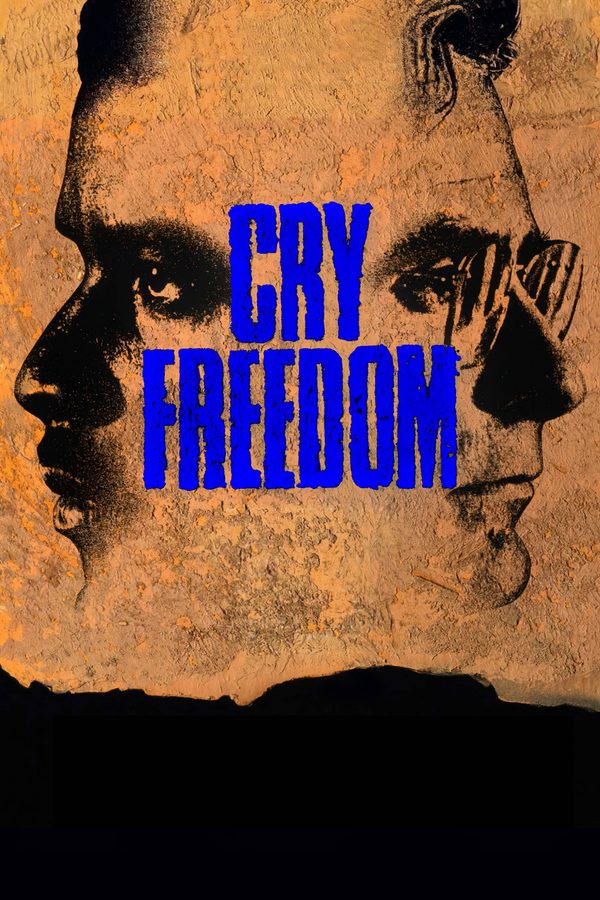
Cry Freedom (1987) on Netflix
PG19872h 37mBiographyDramaHistory
Donald Woods, editor of a liberal South African newspaper, is critical of activist Steve Biko's views. After meeting Biko, Woods visits a black township and begins to see apartheid's effects.
- Netflix3.8/5
- IMDb7.4/1015,472 votes
- Rotten Tomatoes73%
Trailer

Plot summary
Donald Woods is the chief editor of the Daily Dispatch, a liberal newspaper in South Africa. He has written editorials critical of Steve Biko, a black activist banned by the government. After a news story about a slum demolition, Woods seeks more information and meets Biko. Biko invites him to visit a black township, where Woods witnesses the impoverished conditions and restrictions of apartheid. Woods begins to accept Biko's goal of a country where black and white people have equal opportunities. A friendship develops between them. As Woods learns more about Biko's views, the security police begin to pay attention to Woods and his family.
Cast










Did you know?!Facts and trivia about Cry Freedom (1987)
Can contain spoilers, watch the movie first.
- When the film was finally released in South Africa in July 1988, police seized it as an alleged threat to national security; it was only approved for release the following month, and even then only in several bantustans rather than the country proper.
- Because the political situation made filming in South Africa impossible at the time, the production shot every outdoor scene and roughly 70% of its interiors in Zimbabwe, primarily around Harare, with the remaining interior shots filmed in England.
SPOILER
The circumstances leading to Biko's death caused worldwide anger and made him a martyr and symbol of black resistance; the South African government responded by 'banning' a number of individuals, including Donald Woods, while the United Nations Security Council later imposed an arms embargo against South Africa.- To promote the film, a live version of Peter Gabriel's 1980 protest song "Biko" was released, and though the recording never actually appeared on the film's soundtrack, its music video used footage from the movie.
- The film's title song earned a Grammy nomination for Best Song Written for Visual Media at the 31st Annual Grammy Awards but lost to Phil Collins's "Two Hearts," written for the film Buster.