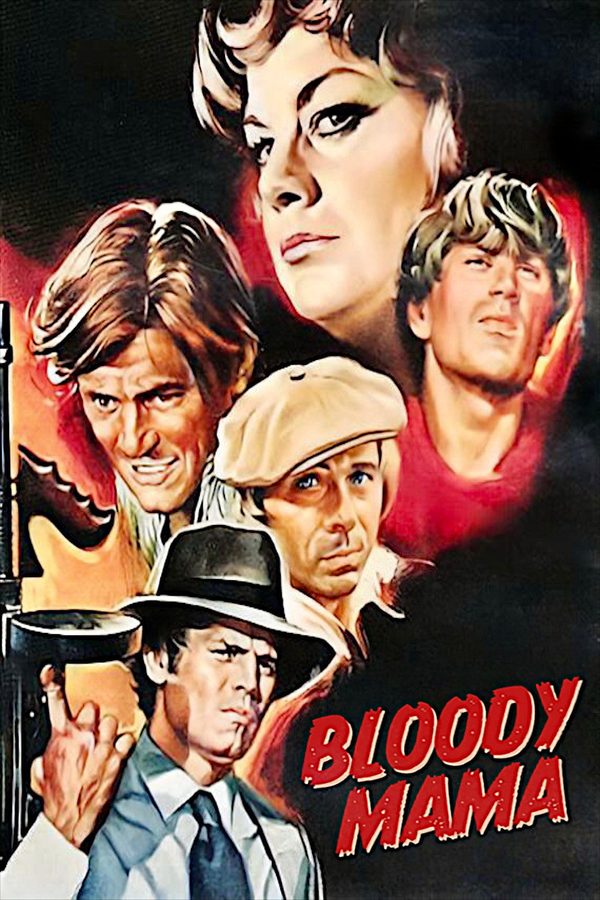
Bloody Mama (1970) on Netflix
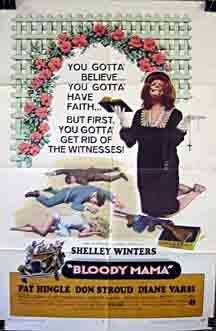
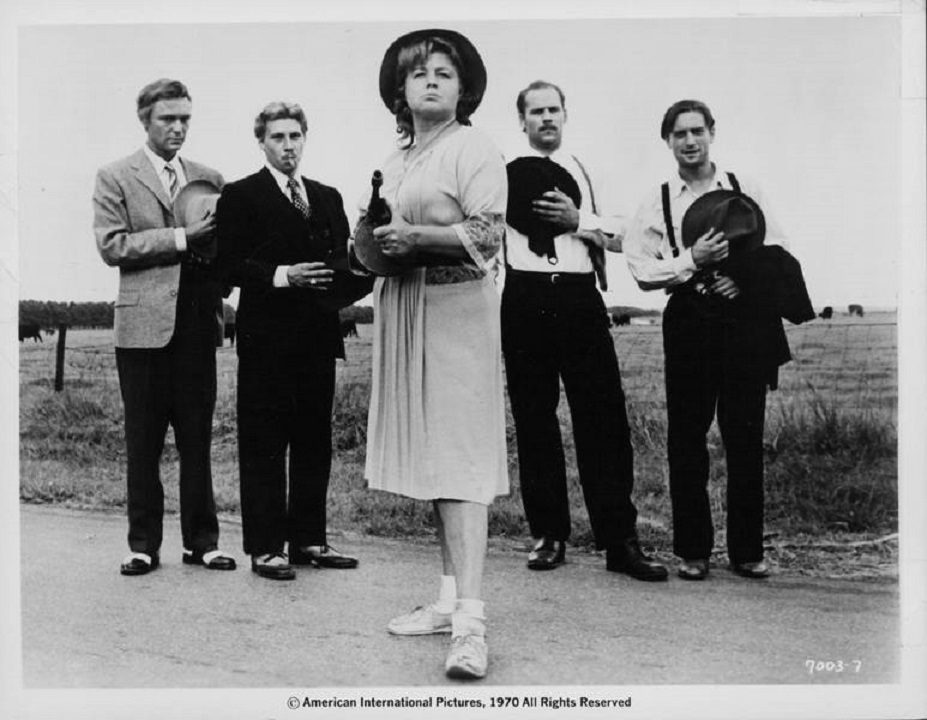
Kate 'Ma' Barker runs her four grown sons as a Depression-era robbery gang in Arkansas. When two land in jail, she and the others stage bank holdups to buy their release.
- Netflix2.7/5
- IMDb5.7/104,322 votes
- Rotten Tomatoes13%
Trailer

Plot summary
Arthur, Herman, Fred and Lloyd Barker are grown men kept under the thumb of their mother Kate, known as Ma, in rural Arkansas during the Depression. Ma organizes their crimes and brutalizes the people around her; she was raped as a child by her father and brothers. She leaves her husband George and the family home to take the boys on a spree of robbery and killing. With Herman and Fred held on minor theft counts, Kate gathers Arthur and Lloyd and stages a string of bank holdups to pay for their release. A gunman named Kevin Dirkman, Fred's older cellmate and one-time lover, joins the crew, along with Mona Gibson, a local prostitute Herman knew before prison.
Cast













Did you know?!Facts and trivia about Bloody Mama (1970)
Can contain spoilers, watch the movie first.
- Two characters in Bloody Mama were drawn from the real Barker gang: the gunman Kevin was patterned on the historical gunman Alvin Karpis, and the kidnapped businessman Sam Pendlebury combines two real victims, William Hamm and Edward Bremer, abducted by the gang in 1933 and 1934.
- Bloody Mama was initially banned in France and New Zealand, and the BBFC refused it certification in the United Kingdom, though it was still screened at the National Film Theatre.
- Screenwriter Robert Thom's novelization of the film was banned by New Zealand's Indecent Publications Tribunal in 1971, but 40 years later, in 2012, the ban was overturned by the tribunal's successor, the Office of Film and Literature Classification.