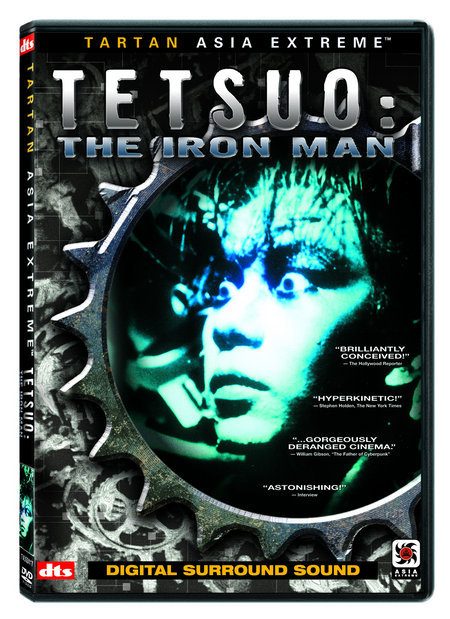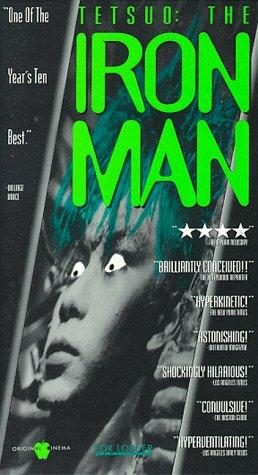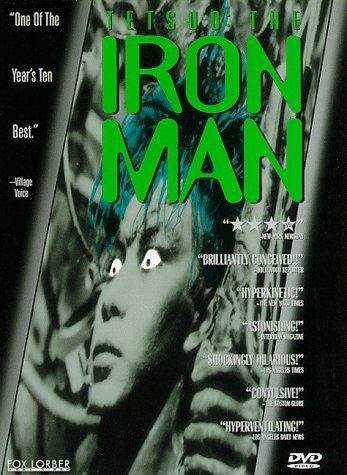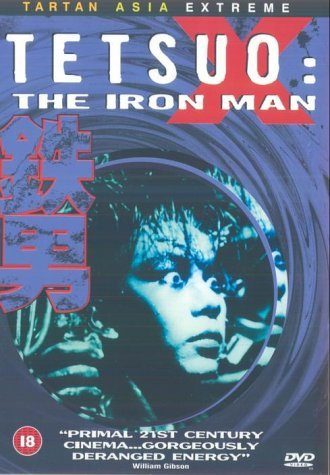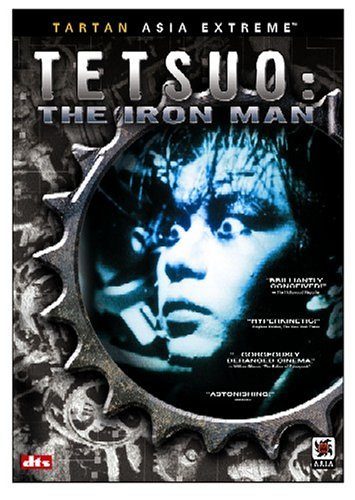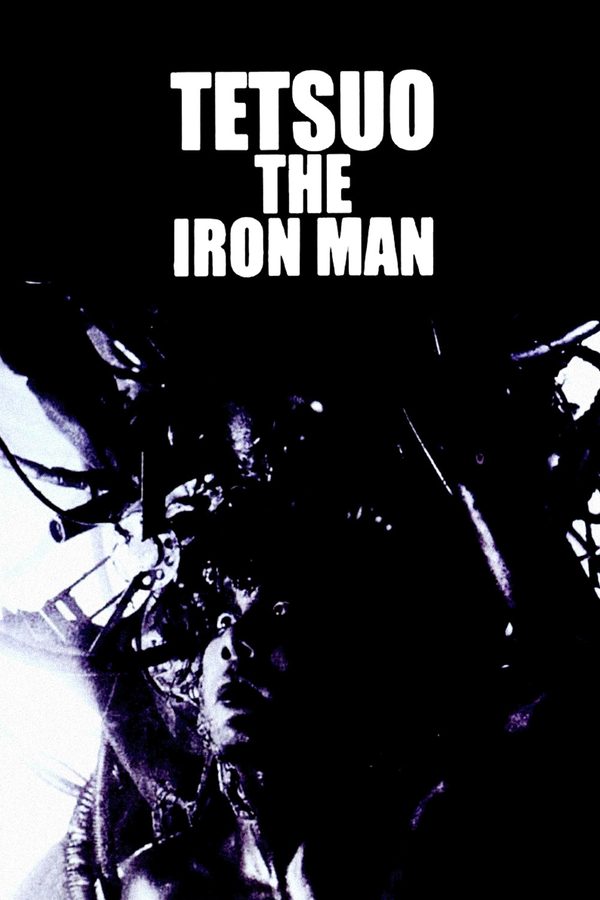
Trailer

Plot summary
Maggots have taken hold in the wound where a metal fetishist buried a rod of scrap in his thigh. He runs screaming into the street, and a car knocks him down. Elsewhere in the city, a salaryman is troubled by daydreams of machinery, and while shaving he finds a metal spike breaking out of his cheek. He phones his girlfriend and goes to work. On the platform a woman in glasses picks up a mass of flesh and metal with a pen and is taken over by it. She comes at him, and he flees, hiding first in a toilet and then in a workshop, where metal powers of his own begin to answer her. His flesh is turning to iron.
Cast


Did you know?!Facts and trivia about Tetsuo: The Iron Man (1989)
Can contain spoilers, watch the movie first.
- Taguchi said that nearly every day the production lost a crew member, until only actors were showing up and they filled in on technical roles. When Tsukamoto acted on screen, Kei Fujiwara operated the camera; she is credited as assistant director, costume designer and second director of photography.
- Tomorowo Taguchi's costume was made from scrap metal and small electronic appliance parts stuck to him with double-sided adhesive tape, and became so heavy he could not get up from his make-up chair. After a day's shooting, he said his skin felt like sandpaper.
- Shinya Tsukamoto ran out of money while filming and cut a trailer to show potential distributors for more funding; through contacts at the PIA Film Festival and F2 distributing he reached Japan Home Video, which invested to get the film completed.
- Tsukamoto found musician Chu Ishikawa through a tape by his group Zeitlich Vergelter; Ishikawa had never scored a film, and when told to make music using only the sound of metal, he followed his own instincts instead.
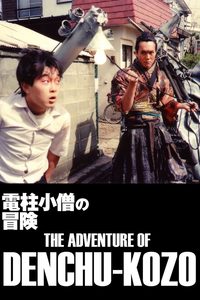
- While Tsukamoto was editing Tetsuo: The Iron Man, his short film The Adventure of Denchu Kozo won the Grand Prize at the PIA Film Festival; he said it felt like "walking out of the darkness into a bright light" and gave him motivation to finish editing.
- Jay McRoy, author of Nightmare Japan: Contemporary Japanese Horror Cinema, called Tetsuo: The Iron Man one of the most influential Japanese horror films ever produced, saying that with Sogo Ishii's Burst City (1982) and Toshiharu Ikeda's Evil Dead Trap (1988) it spurred a wave of graphically violent Japanese horror films.