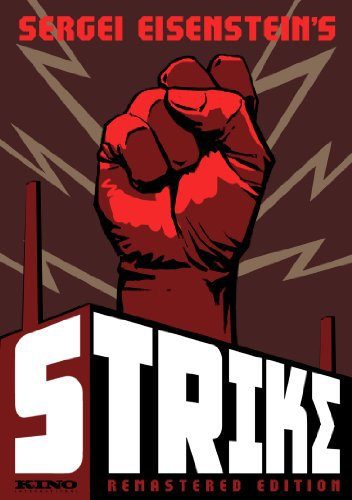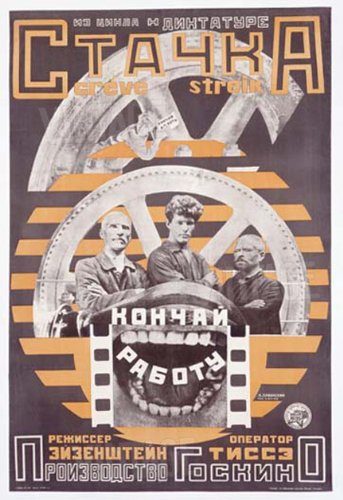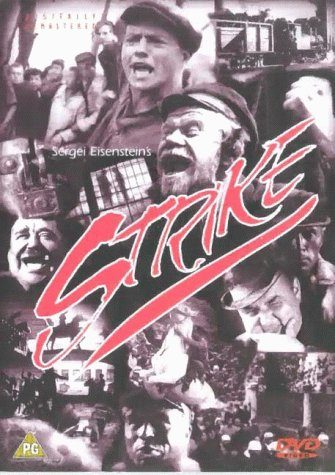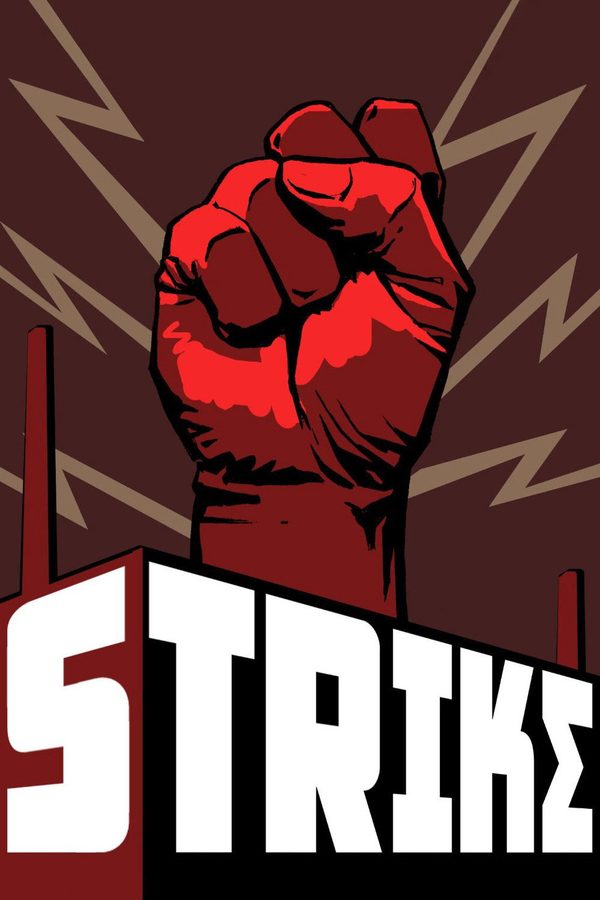
Strike (1925) on Netflix
In pre-revolutionary Russia, the workers of a factory labor under low wages, long hours, and harsh supervisors. When a micrometer goes missing, suspicion lands on Yakov, who reported the theft.
- Netflix4.4/5
- IMDb7.6/109,631 votes
- Rotten Tomatoes100%
Trailer

Plot summary
A factory in pre-revolutionary Russia runs on the labor of its workers, who are tired of low wages, long hours, and the way their supervisors treat them. Leaflets pass quietly among them, and they meet out of sight to plan. The administration keeps a list of secret agents, each with an animal code name, and sends them into the shops to watch. A micrometer worth three weeks of pay disappears, and Yakov, who goes to the office to report the theft, is the one accused.
Cast





- I. Ivanovas Chief of Police
- Yudif Glizeras Queen of Thieves

- M. Mamin



Did you know?!Facts and trivia about Strike (1925)
Can contain spoilers, watch the movie first.
- The Goskino board removed Eisenstein from Strike after two days of test shoots, fearing he would produce a plotless "montage of attractions"; only after Mikhin and Tisse personally guaranteed the film's completion was he given a third test shoot and allowed to continue with production.
- While making Strike, Eisenstein kept quarrelling with the studio over enormous demands, such as a thousand extras to form a mob in a scene from part five; much of the crew resented him over the stringent production process, though he was generally unaware of it.
- Strike has an average shot length of 2.5 seconds, less than half that of a typical Hollywood film, and Eisenstein's editing was rapid even compared with other Soviet filmmakers of the era.
- In some scenes of Strike the aspect ratio is dynamic: masks in front of the camera were added or removed to change the framing of a shot, and the film also uses multiple exposures and iris shots.
- Francis Ford Coppola revives and quotes the slaughtering-of-the-cow metaphor from Strike at the end of his 1979 film Apocalypse Now.
- Strike was completed in late 1924, but its release was delayed because of a shortage of positive film stock.
- Eisenstein worked on the Strike script with Esfir Shub at her house, but after the script was officially accepted he removed her from the project.