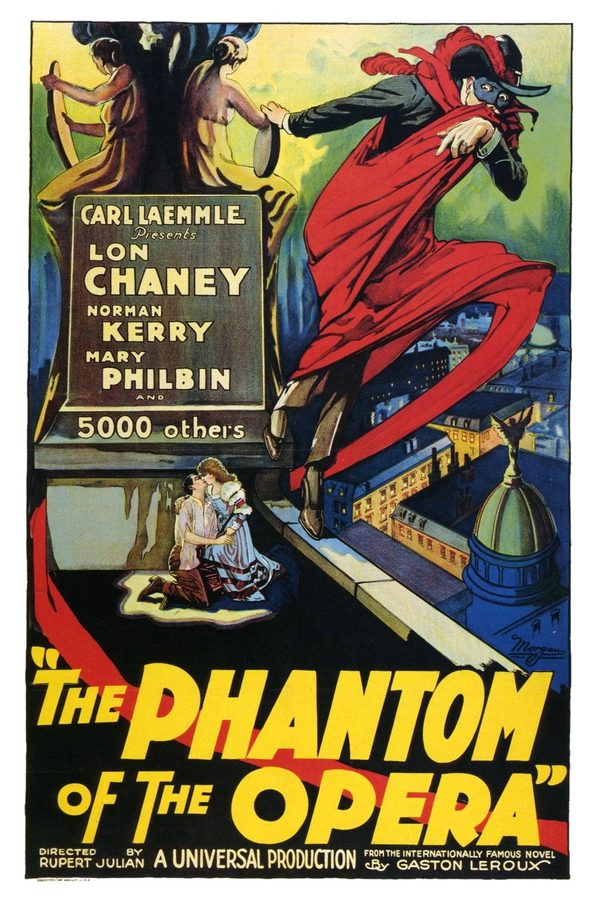
The Phantom of the Opera (1925) on Netflix
In 1890s Paris, Christine Daaé sings at the Opera House, tutored by a voice she calls the Spirit of Music. The Opera Ghost demands she replace the prima donna, Carlotta.
- Netflix4.1/5
- IMDb7.5/1022,494 votes
- Rotten Tomatoes90%
Trailer
Plot summary
At the Paris Opera House in the 1890s, Comte Philippe de Chagny and his brother Raoul attend a production of Faust, where Raoul's sweetheart, Christine Daaé, hopes to sing. Raoul wants her to give up performing and marry him, but Christine puts her career first. The retiring managers warn their successors about the Opera Ghost, said to occupy box No. 5. Carlotta, the company's prima donna, receives a letter signed by the Phantom demanding that Christine take her place, with threats attached. In her dressing room a voice instructs Christine to do exactly that. Christine tells Raoul that a mysterious voice, the Spirit of Music, has been tutoring her; he suggests someone is joking, and she leaves in anger. That evening she sings in Carlotta's place.
Cast





Did you know?!Facts and trivia about The Phantom of the Opera (1925)
Can contain spoilers, watch the movie first.
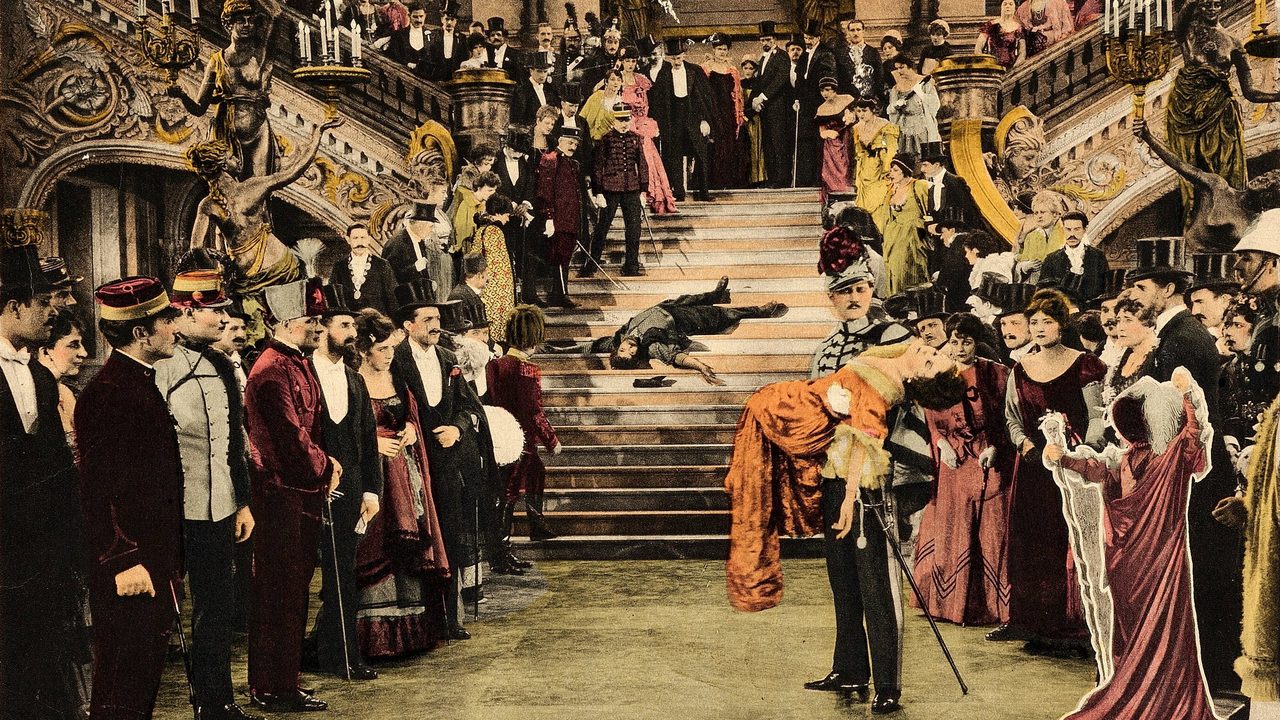
- Universal built its Paris Opera House set on Stage 28, which became the first soundstage created with steel girders set in concrete because it had to hold hundreds of extras. The stage kept parts of the set until its demolition on September 23, 2014, making it the world's oldest surviving structure built for a specific film.
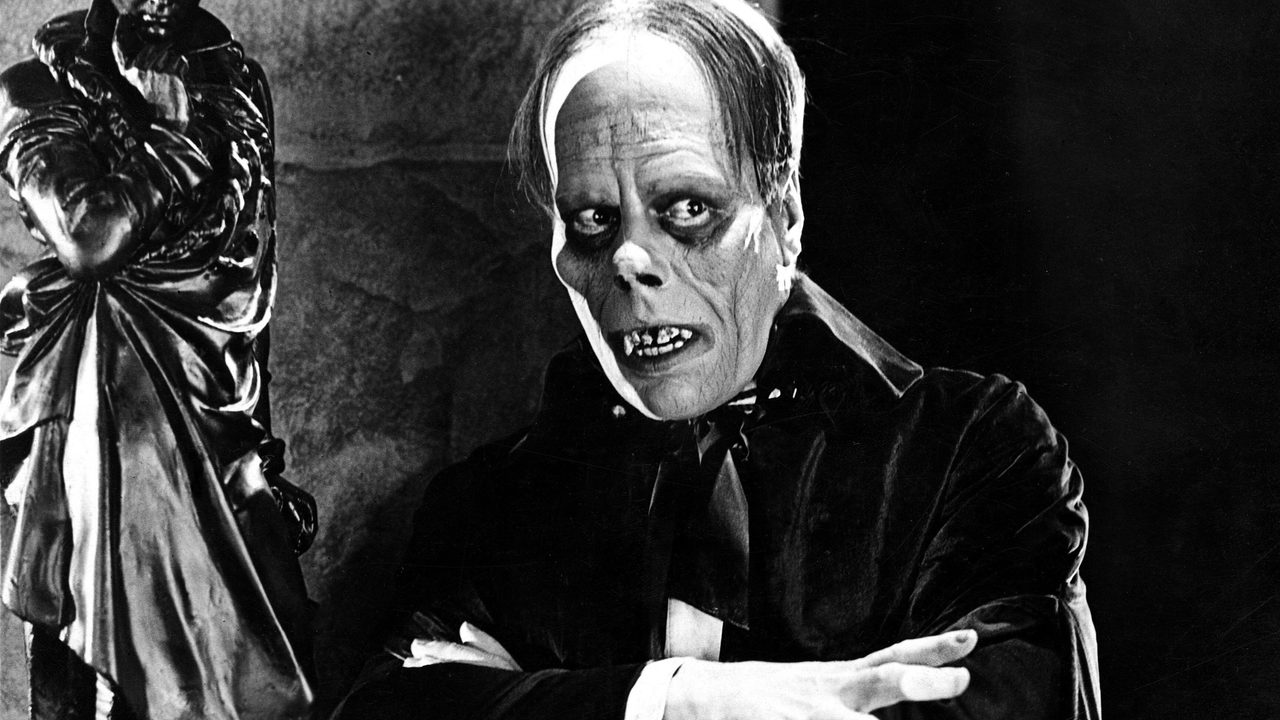
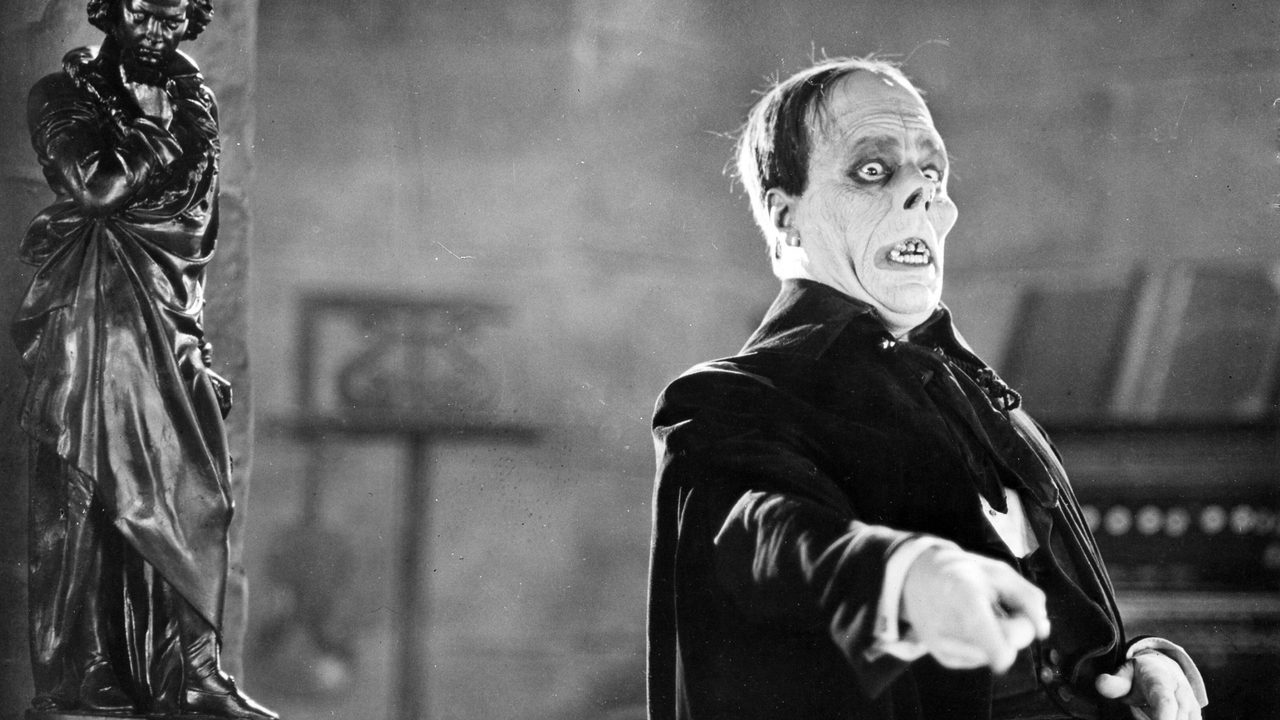
- To transform Lon Chaney's nose for the Phantom, he applied putty to sharpen its angle and inserted two loops of wire into his nostrils, with guidewires hidden under the putty pulling them upward. Cinematographer Charles Van Enger said the wires sometimes made Chaney "bleed like hell".
- The first cut of the film, previewed in Los Angeles on January 26, 1925, drew such a hostile reaction that viewers suggested adding comedy, and the studio changed the ending so the Phantom is not redeemed by a woman's kiss. That redemptive ending is now lost, with only a few frames surviving.
- Director Rupert Julian and star Lon Chaney stopped speaking during the shoot, leaving cinematographer Charles Van Enger to relay directions; Chaney's answer to one of Julian's notes was "Tell him to go to hell."
- Universal hired Edward Sedgwick, later the director of Buster Keaton's The Cameraman, to reshoot most of the film as a romantic comedy with action elements, adding Chester Conklin and Vola Vale as comic relief to the heroes.
- The film's success led Universal to finance a long string of horror films through the 1950s, starting with Dracula, Frankenstein, The Mummy, The Invisible Man, The Wolf Man and Creature from the Black Lagoon.
- Lon Chaney was angered that Universal's 1929 sound reissue went ahead without him, giving his dialogue to the new assistant character, which strained his relationship with the studio and fed his hesitance to appear in Dracula. The reels were destroyed in a 1948 studio fire, though the soundtrack discs survived.
- Ben Carré drew 24 charcoal sketches of the opera's back and below-stage areas, which the filmmakers replicated. He was in Europe when shooting began and only realized in the 1970s, when shown a print of the film, that his designs had been incorporated.