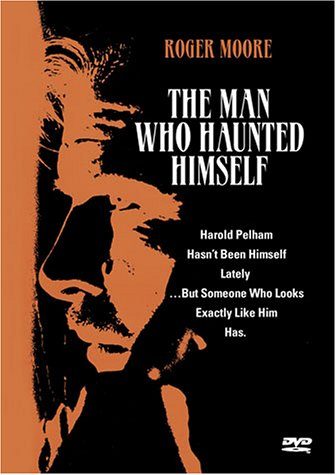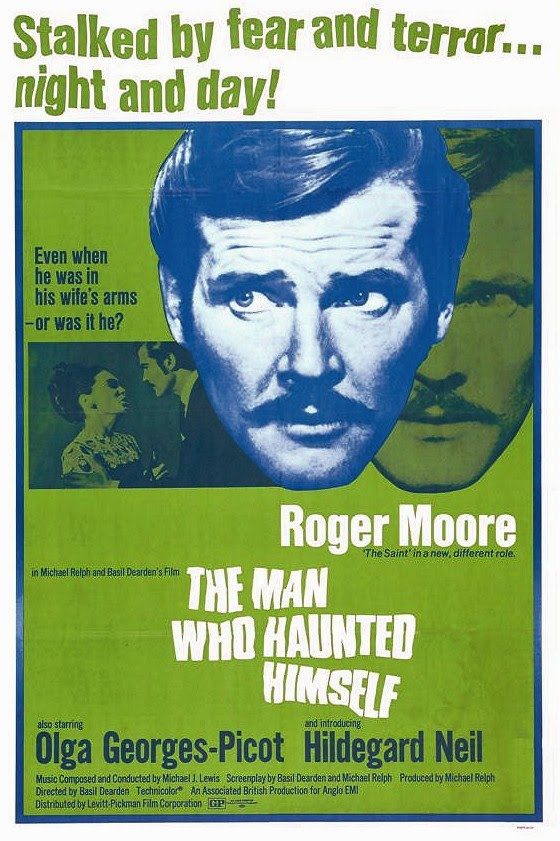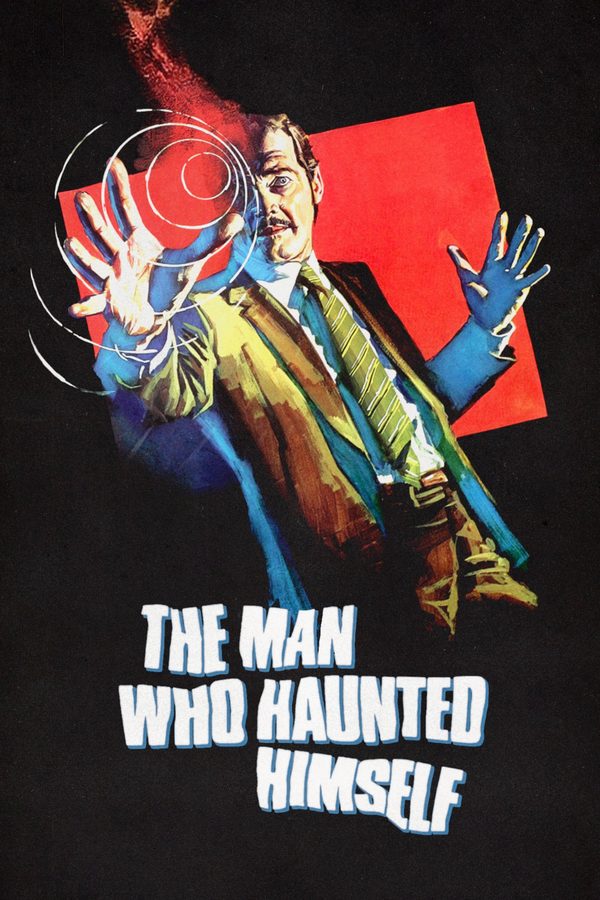
The Man Who Haunted Himself (1970) on Netflix
Harold Pelham, a marine technology firm director, crashes at high speed. He recovers to find friends and colleagues claiming to have seen him in places he has no memory of visiting.
- Netflix3.7/5
- IMDb6.4/103,392 votes
- Rotten TomatoesNot available
Trailer

Plot summary
At Freeman, Pelham & Dawson, a marine technology company in London, Harold Pelham holds a directorship. Driving home from his office, he seems to undergo a sudden personality change, starts to drive fast and recklessly, and ends in a serious crash. On the operating table he briefly suffers clinical death, and the monitor appears to register two heartbeats. After he recovers, friends, colleagues and acquaintances claim to have seen him in places he has no memory of having been, behaving in ways out of character. His wife, Eve, notices a mysterious silver car parked outside their house.
Cast




- Hugh Mackenzieas James Pelham









Did you know?!Facts and trivia about The Man Who Haunted Himself (1970)
Can contain spoilers, watch the movie first.
- The Man Who Haunted Himself was Basil Dearden's last film. On 23 March 1971, driving home from Pinewood Studios, he veered off the M4, hit a road sign and his car burst into flames.
- Basil Dearden was so impatient that he would call 'Action' before the clapper boy was off the screen, and one shot in the finished film still shows the last three frames of the clapper boy because there was no cover and it had to be used.
- The 1969 Lamborghini Islero GTS that appeared in the film is one of only five right-hand-drive versions built; it sold at auction in 2010 for £106,400 and again in March 2020 for a hammer price of £265,000.
- The film's poor box office sent Roger Moore back to television in The Persuaders, but it was re-released in cinemas in late 1972 to exploit publicity from his casting as James Bond.
- Roger Moore was paid £20,000 plus a deferment and said it was the first picture in eleven years in which he had had to show any emotion.