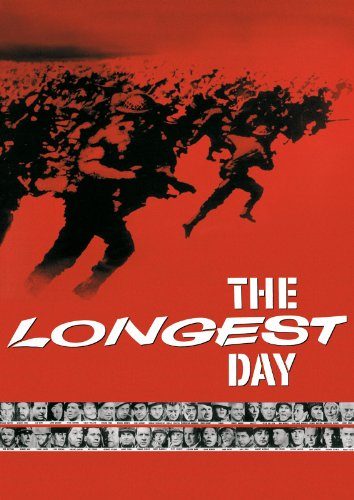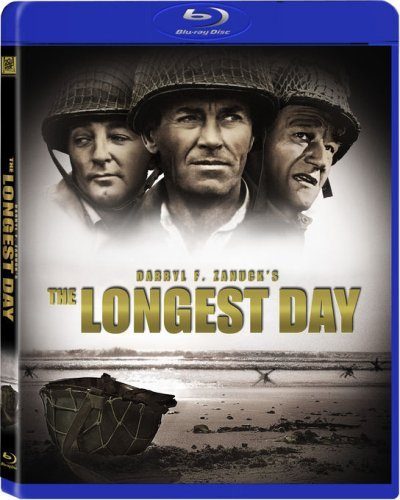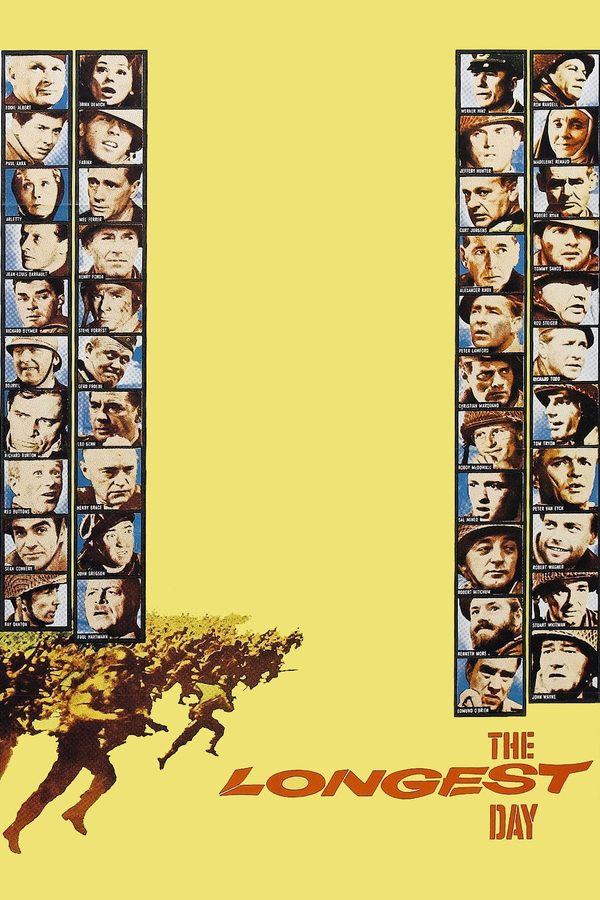
The Longest Day (1962) on Netflix
June 1944: Allied forces gather in England while storms batter the Channel, and Gen. Dwight D. Eisenhower orders the invasion of France to begin. German commanders expect the attack at Calais.
- Netflix4.0/5
- IMDb7.7/1063,647 votes
- Rotten Tomatoes83%
Trailer

Plot summary
Storms sweep the English Channel in June 1944 as Allied armies wait in England, some of them already aboard their transports. Their target is the Normandy coast, with airborne troops to be flown over in advance to seize bridges and towns inland. Field Marshal Erwin Rommel inspects the Atlantic Wall and warns his officers that the landings must be halted at the water's edge. Within the German High Command there is disagreement over where the blow will fall; the bad weather makes an attack seem unlikely, and Calais remains the expected point. Gen. Dwight D. Eisenhower studies a favorable forecast and gives the order to proceed. In France, Resistance members and SOE agents ready acts of sabotage, while British troops in gliders head for Pegasus Bridge.
Cast




Did you know?!Facts and trivia about The Longest Day (1962)
Can contain spoilers, watch the movie first.
- The filmmakers employed several actual Allied and Axis D-Day participants as consultants, many of whom had their roles re-enacted in the film, among them John Howard, who led the airborne assault on the Pegasus Bridge, Lord Lovat, who commanded the 1st Special Service Brigade, and Werner Pluskat, the major who was the first German officer to see the invasion fleet.
- There were discussions about having former President Dwight D. Eisenhower play himself, and he was willing, but makeup artists could not make him appear young enough, so the role went to Henry Grace, a set decorator with no acting experience who was a dead ringer for the younger Eisenhower; someone else dubbed his lines.
- Richard Burton and Roddy McDowall, who had not been used for several weeks while filming in Rome, were so bored that they phoned Zanuck begging to do "anything" on The Longest Day; they flew themselves to the location and each filmed their cameos in a day for free.
- All the other major actors accepted $25,000 for their appearance, but John Wayne insisted on $250,000 to punish Zanuck for once referring to him as "poor John Wayne" when describing Wayne's problems with his lavish 1960 film The Alamo.
- During the filming of the landings at Omaha Beach, the extras appearing as American soldiers did not want to jump off the landing craft because they thought the water would be too cold, so Robert Mitchum, playing Gen. Norman Cota, jumped in first and they followed his example.
- Several cast members had seen action as servicemen during the war, including Richard Todd of the Parachute Regiment, who had taken part in the real assault on Pegasus Bridge in the early hours of D-Day.
- Bill Millin was the piper who accompanied Lord Lovat to Normandy with his bagpipes, and it is a common misconception that he played himself; he was actually portrayed by Pipe Major Leslie de Laspee, the official piper to the Queen Mother at the time of filming.
- Richard Todd played Maj. John Howard, leader of the British airborne assault on the Pegasus Bridge, having taken part in the real bridge assault on D-Day himself; he was offered the chance to play himself but took the part of Howard instead.