Trailer

Plot summary
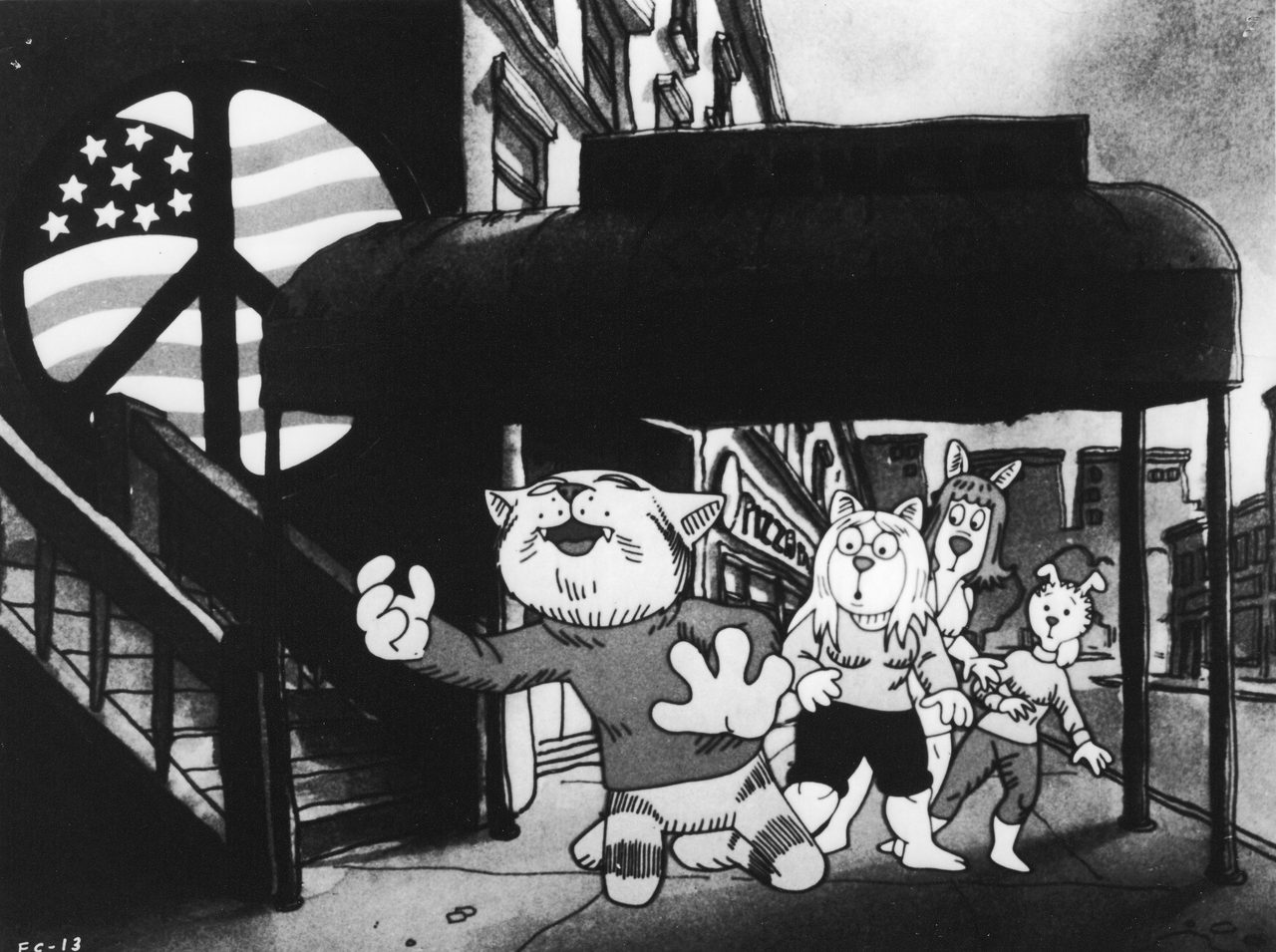
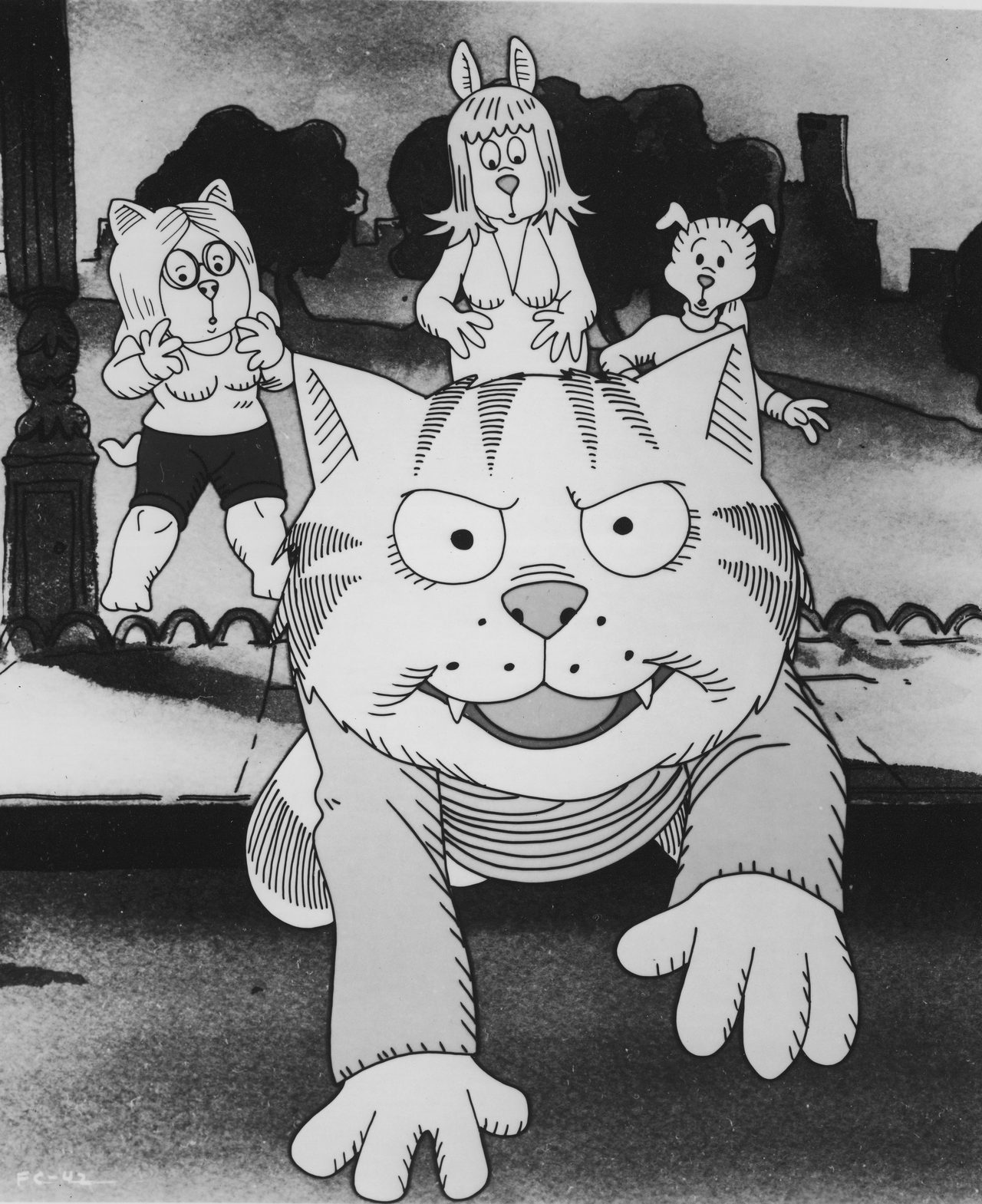
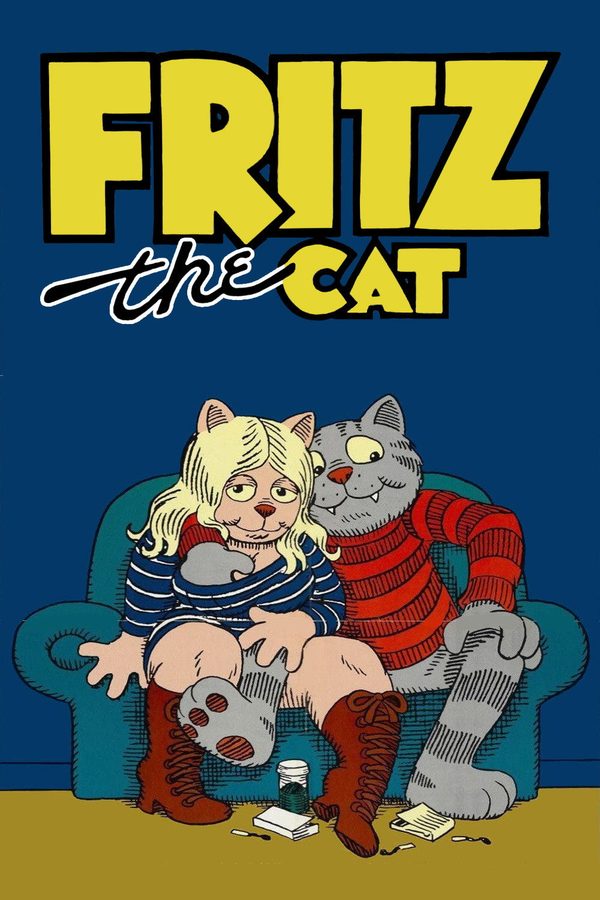
Fritz, a tabby cat in an anthropomorphic Manhattan of the 1960s, prefers women and a good time to his college classes. He comes to Washington Square Park with his friends to charm three girls, who instead pay attention to a crow nearby. The girls make remarks about black people that land as condescending; the crow rebukes them and goes, and Fritz poses as a troubled thinker and invites the three to come with him. They reach an apartment where a party is under way. Because the other rooms are crowded, Fritz pulls the girls into the bathroom, where the group has sex. Two officers drawn as pigs then arrive and climb the stairs, and partygoers crowd in while Fritz, squeezed in the bathtub, turns to marijuana.
Cast
- Skip Hinnantas Fritz the Cat (voice)
- Phil Seulingas Pig Cop #2 (voice)
- Judy Englesas Winston Schwartz / Lizard Leader (voice)
- Mary Deanas Girl #1 / Girl #2 / Girl #3 / Harriet (voice)
- Charles Spidaras Bar Patron / Duke the Crow (voice)


Did you know?!Facts and trivia about Fritz the Cat (1972)
Can contain spoilers, watch the movie first.
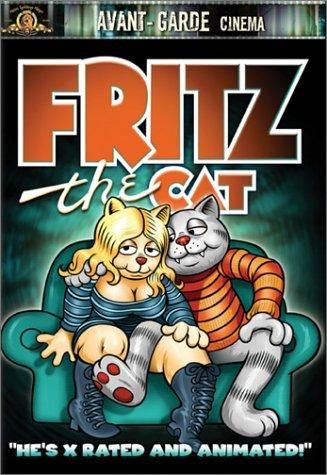
- Fritz the Cat became the first American animated film ever given an X rating by the Motion Picture Association of America, a rating that had until then been associated mainly with arthouse live-action films rather than cartoons.
- Against its $700,000 budget, Fritz the Cat grossed $25 million in the United States and over $90 million worldwide, and was at that point the most successful independent animated feature of all time.
- Producer Steve Krantz tried to fight the film's X rating on the grounds that its content was cartoon animals, telling Variety in May 1972 that animals having sex isn't pornography, but the MPAA refused to even hear the appeal.
- Director Ralph Bakshi originally wanted the film to end with Fritz's death, but producer Steve Krantz overruled him and forced a rewrite of the ending that was ultimately used in the released version.
- Creator Robert Crumb was unhappy enough with the adaptation that he got a kind of revenge in his own comics: later in 1972 he published "Fritz the Cat, Superstar," in which the character is killed with an icepick by a jealous girlfriend.
- For the film's synagogue scene, director Ralph Bakshi used an existing documentary recording of his own father and uncles chanting prayers, a choice that carried personal meaning for him after they had died.
- Veteran Warner Bros. animator Ted Bonnicksen kept working on his sequences for the film, most notably the synagogue scene, even while he was suffering from leukemia, reportedly taking his drawings home at night to finish the animation.
- For the opening sequence, Bakshi recorded conversations with two construction workers he paid $50 each to speak on tape, capturing their conversation while socialising with them.