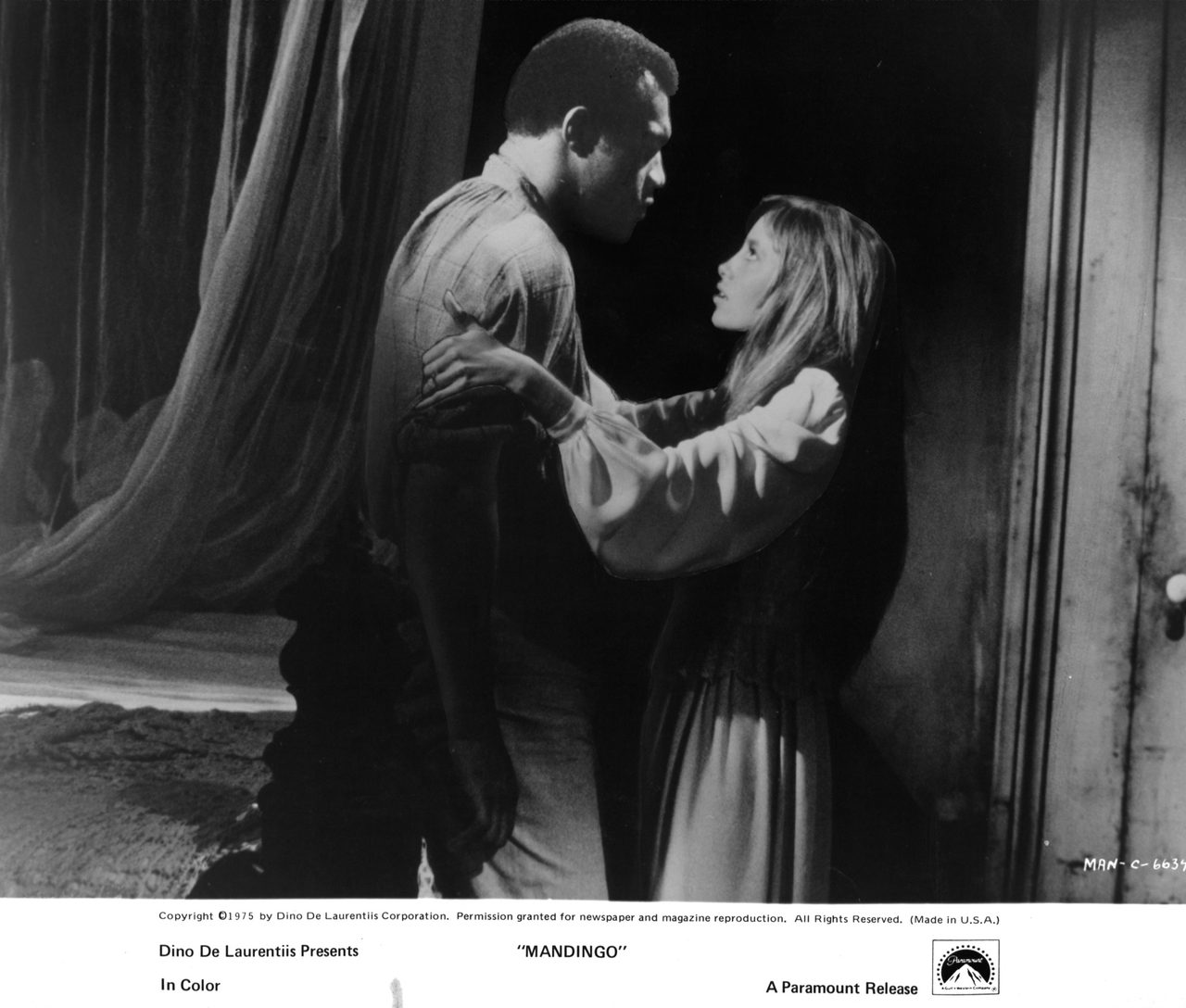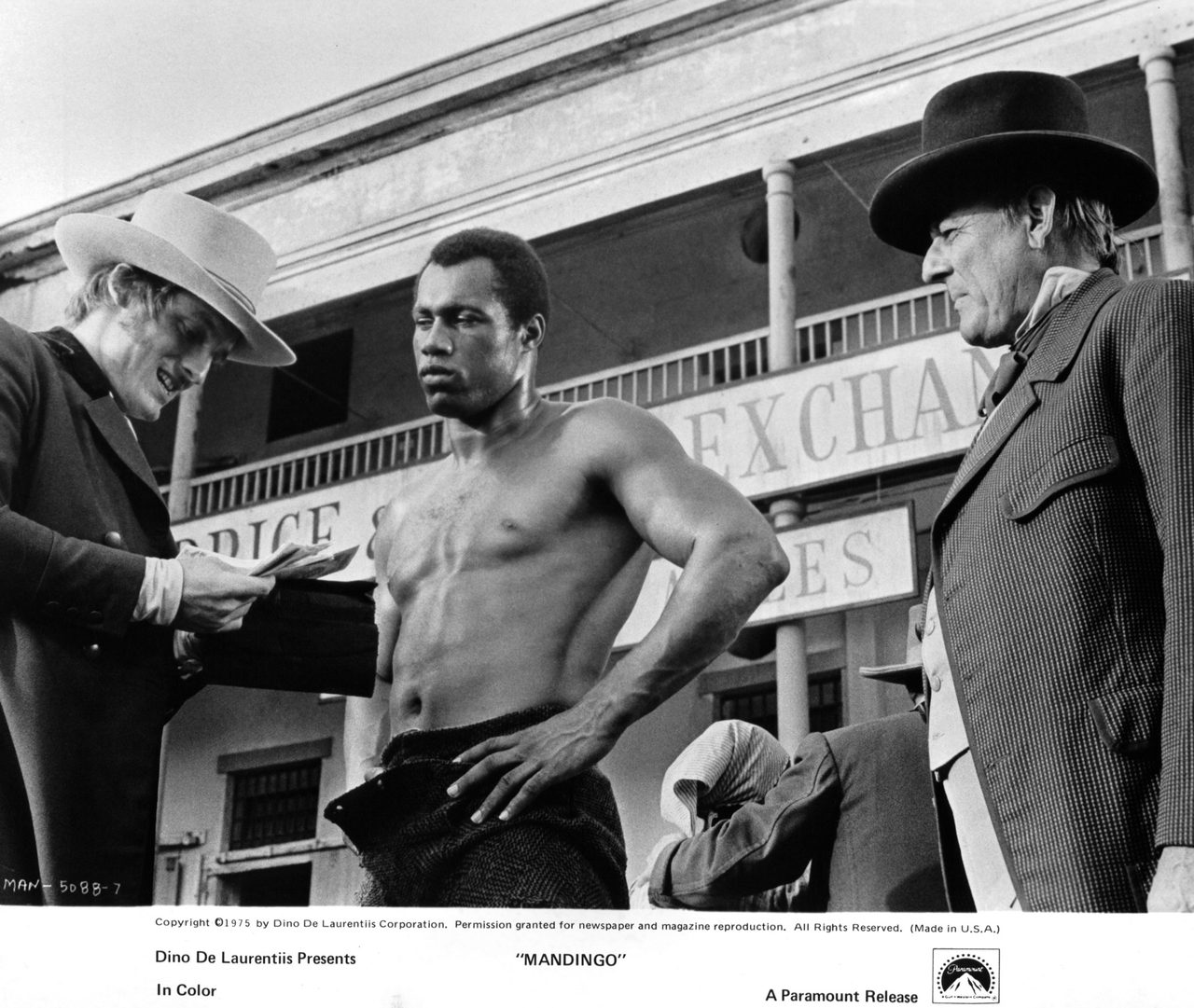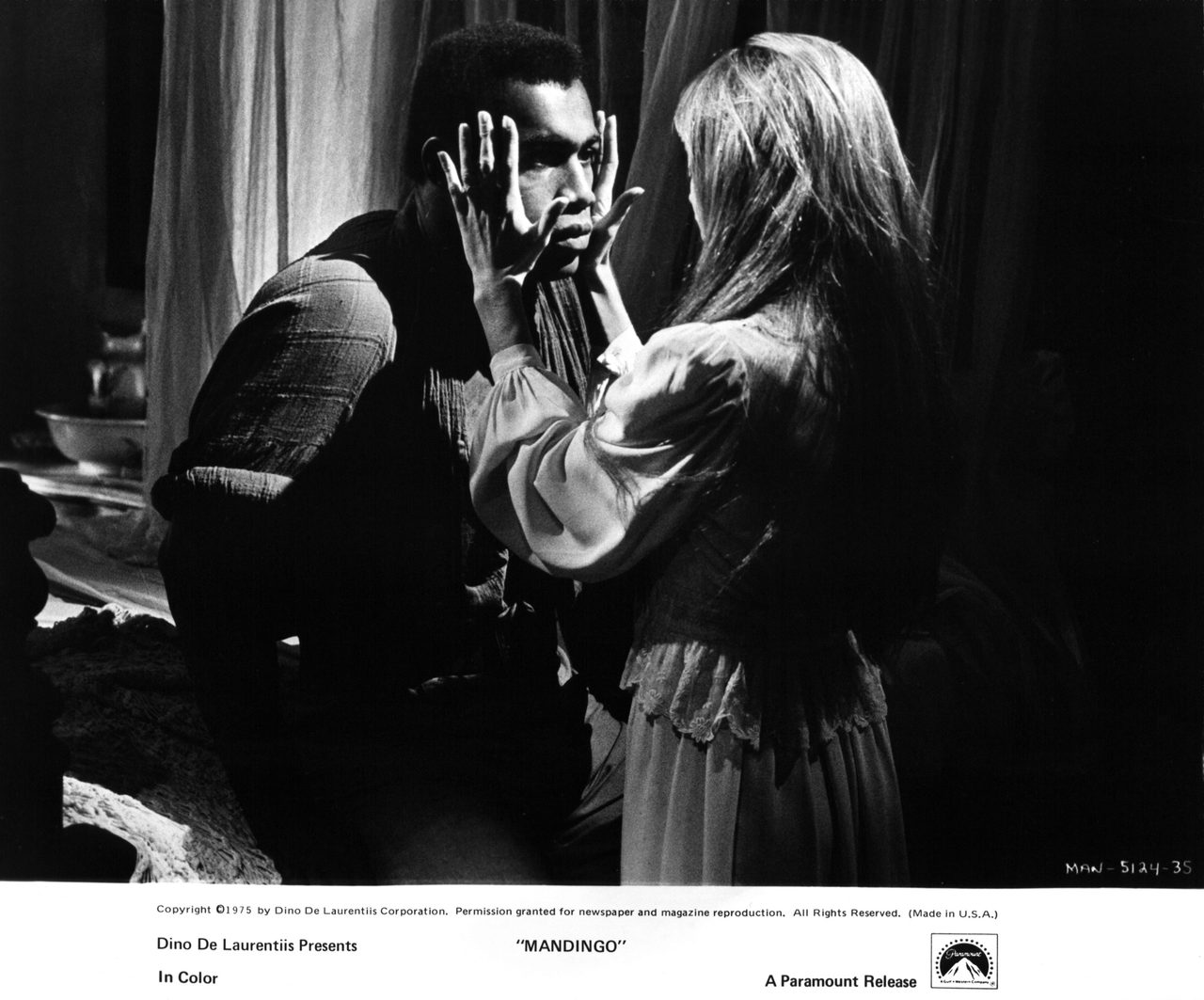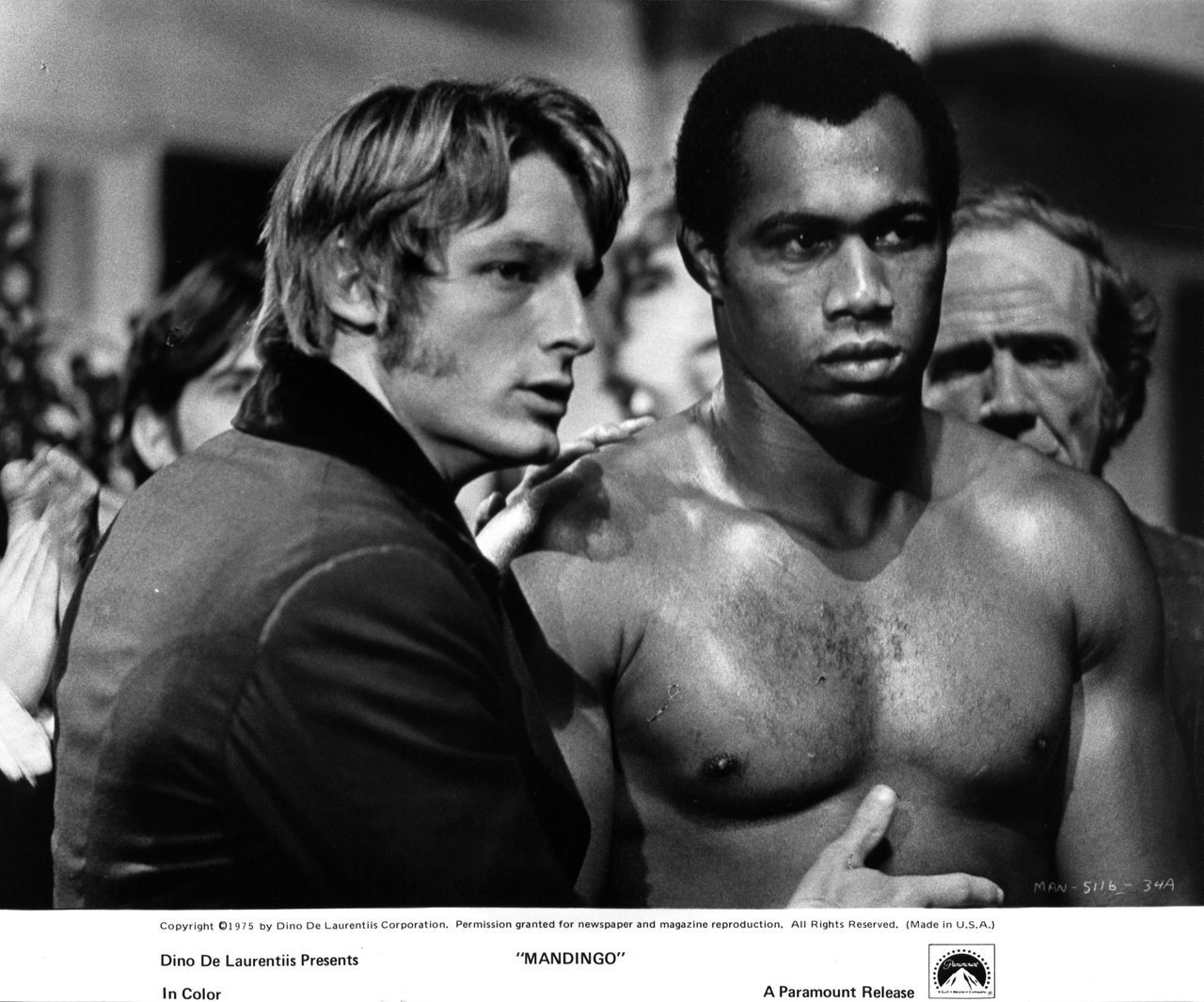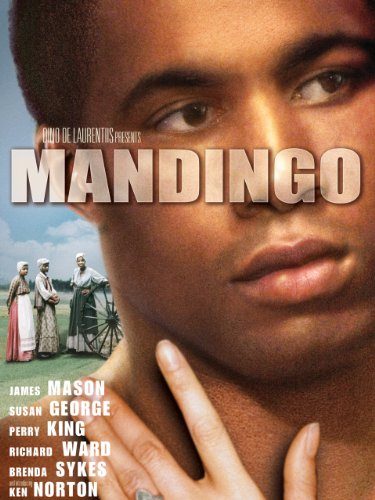
Mandingo (1975) on Netflix
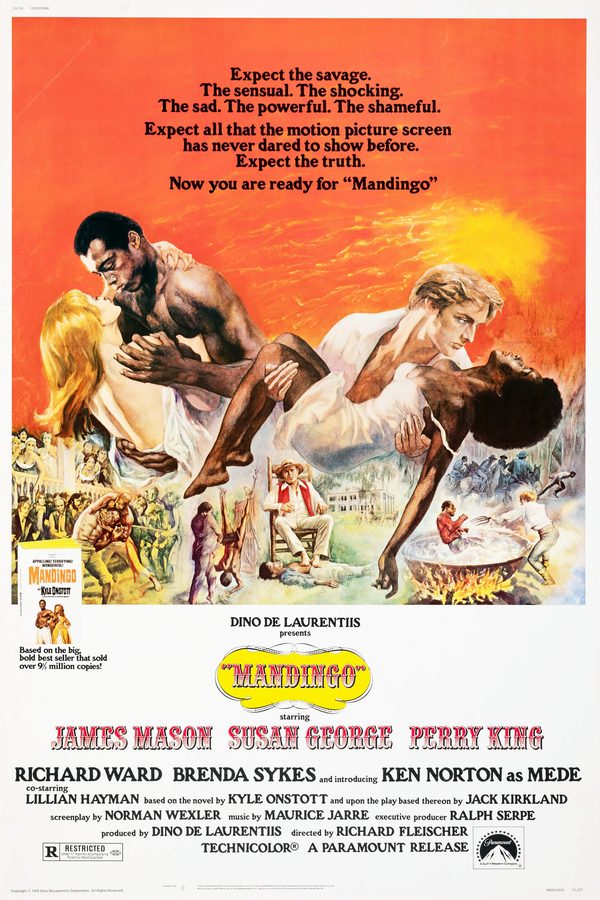
Warren Maxwell presses his son Hammond to marry and provide an heir for the run-down plantation. Hammond chooses his cousin Blanche, and buys a Mandingo slave, Mede, to train as a prize-fighter.
- Netflix3.3/5
- IMDb6.5/104,743 votes
- Rotten Tomatoes29%
Trailer

Plot summary
Before the Civil War, the run-down Falconhurst plantation belongs to the widower Warren Maxwell, whose son Hammond handles most of its business. Warren wants a grandchild with no Black ancestry, so Hammond marries his cousin Blanche, who wants out of her own house. At another plantation, Hammond picks Ellen, and he later buys her as his sex slave. He also buys a Mandingo slave, Ganymede, nicknamed Mede, and has him trained as a prize-fighter, soaked in a cauldron of hot salt water and bred with Pearl, a slave related to him by blood. Hammond earns money betting on Mede's bouts, while Blanche, given little attention, grows jealous of Ellen.
Cast


Did you know?!Facts and trivia about Mandingo (1975)
Can contain spoilers, watch the movie first.
- Early in development James Cagney was attached to play Warren and Muhammad Ali, then known as Cassius Clay, declined the role of Mede; Charlton Heston turned down Warren, and Hammond was rejected by Timothy Bottoms, Jan Michael Vincent, Jeff Bridges and Beau Bridges.
- Boxer Ken Norton turned down a $250,000 gate to fight Jerry Quarry in order to make the film, and Sylvester Stallone appeared in it as an uncredited extra in the lynching sequence.
- In 1996 Quentin Tarantino cited Mandingo and Showgirls as the only two instances in the last twenty years that a major studio made a full-on, gigantic, big-budget exploitation movie, and the "Mandingo fighting" of his Django Unchained was inspired by the film.
- Roger Ebert of the Chicago Sun-Times gave the film a zero star rating, calling it "racist trash, obscene in its manipulation of human beings and feelings, and excruciating to sit through in an audience made up largely of children".
- Critic Robin Wood called Mandingo "the greatest film about race ever made in Hollywood", while New York Times columnist Dave Kehr called it "a thinly veiled Holocaust film that spares none of its protagonists" and Fleischer's last great crime film.
SPOILER
The film softened the novel's ending: the slave is still boiled, but the part where he pours the soup on the grave was cut, and the character simply pulls away instead.