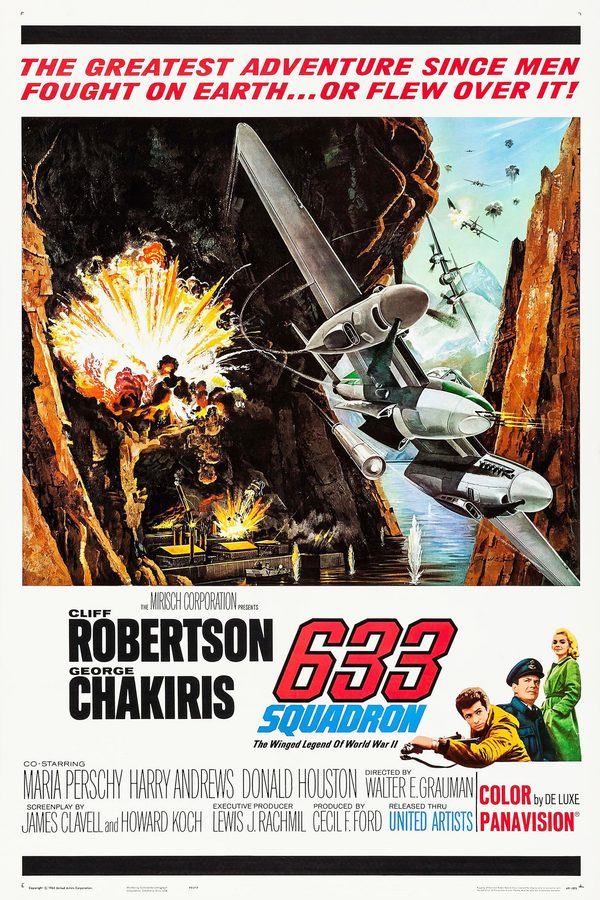
633 Squadron (1964) on Netflix
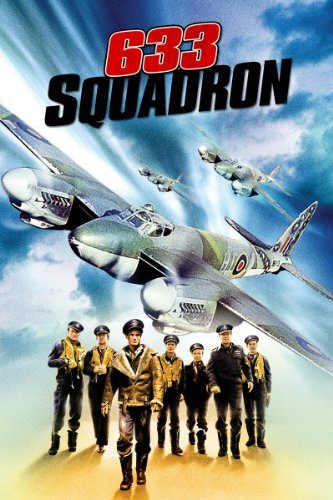
Norwegian resistance leader Erik Bergman brings word of a German rocket fuel plant hidden under a cliff overhang in Norway. Wing Commander Roy Grant's 633 Squadron is assigned to destroy it.
- Netflix2.3/5
- IMDb6.4/105,140 votes
- Rotten Tomatoes29%
Trailer

Plot summary
The Royal Air Force's 633 Squadron, led by Wing Commander Roy Grant, is handed a target it cannot hit from above: a German plant producing fuel for V-2 rockets, built into a cliff overhang at the head of a narrow fjord that anti-aircraft guns line. The answer is to bring the rock down on the plant, a task suited to the squadron's fast, maneuverable de Havilland Mosquitos, and the crews train in the Scottish Highlands where the glens resemble the fjord. There Grant is introduced to Hilde, sister of the Norwegian resistance leader Erik Bergman, and the pair are drawn to each other despite Grant's dislike of wartime relationships. Norwegian resistance fighters are to silence the anti-aircraft defenses immediately before the raid.
Cast
- Scot Finchas Flying Officer Bissell
- John Churchas Flying Officer Evans


Show all 20 cast
- Sean Kellyas Lt. Nigel
- Julian Sherrieras Flight Lt. Singh
- Geoffrey Frederickas Flight Lt. Frank
- Anne Ridleras SS Interrogator
- Peter Krissas Lieutenant Maner (uncredited)
- Cavan Maloneas Ericson, Norwegian Resistance (uncredited)


Did you know?!Facts and trivia about 633 Squadron (1964)
Can contain spoilers, watch the movie first.
- George Lucas has said that the climax, in which the Mosquitos fly down a deep fjord under anti-aircraft fire, gave him the trench run in Star Wars. During post-production he cut sequences from the 1964 film into his own as a guide.
- Because it was the first film shot in color in Panavision widescreen, the usual money-saving trick of dropping in wartime archive footage was unusable, so the production flew genuine period aircraft for much of the aerial action instead of models or effects.
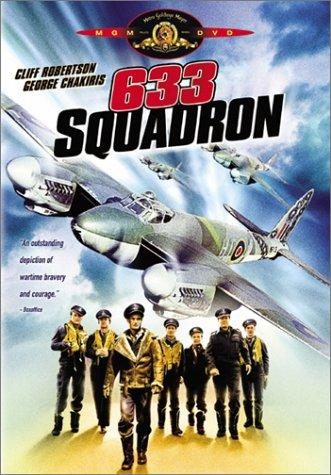
- Eight de Havilland Mosquitos were gathered, only five of them airworthy, the rest taxied on runways or parked as scenery. The flyable ones were ex-target tugs disguised as fighter-bombers by painting over their clear nosecones and side windows and fitting dummy machine gun barrels.
- Director Walter Grauman, a wartime B-25 Mitchell pilot, flew the camera aircraft himself from the right-hand seat. Technical adviser Hamish Mahaddie, who had rounded up the airplanes, told producer Walter Mirisch during filming that he commanded the fourteenth largest air force in the world.
- The story had been circling since 1958, when John Sturges worked on a script with Twilight Zone writer Rod Serling and offered the leading role to Jack Lord. Sturges left to make The Magnificent Seven and Walter Mirisch shelved the project.
- James Clavell, who had written The Great Escape, drafted the screenplay, but Cliff Robertson complained about it just before shooting began, so Walter Mirisch hired the London-based American writer Howard Koch to rewrite the film and keep his star happy.
- Cliff Robertson was a genuine pilot who owned a Supermarine Spitfire and wanted the flying in the film to be accurate, yet he was refused permission to fly at all during the production.
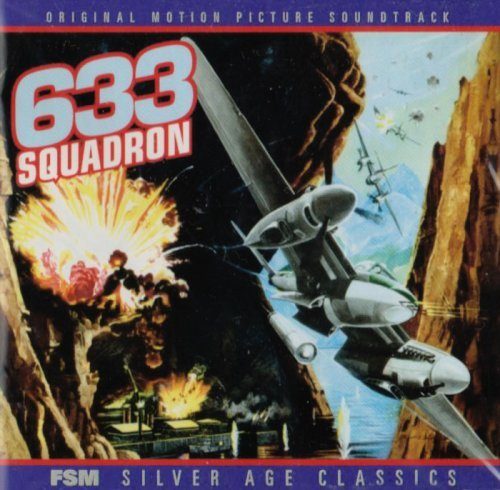
- Composer Ron Goodwin spent a couple of weeks writing themes and throwing them away, then in desperation built the famous march out of the squadron's number itself, turning 633 into a rhythm of six beats followed by three.