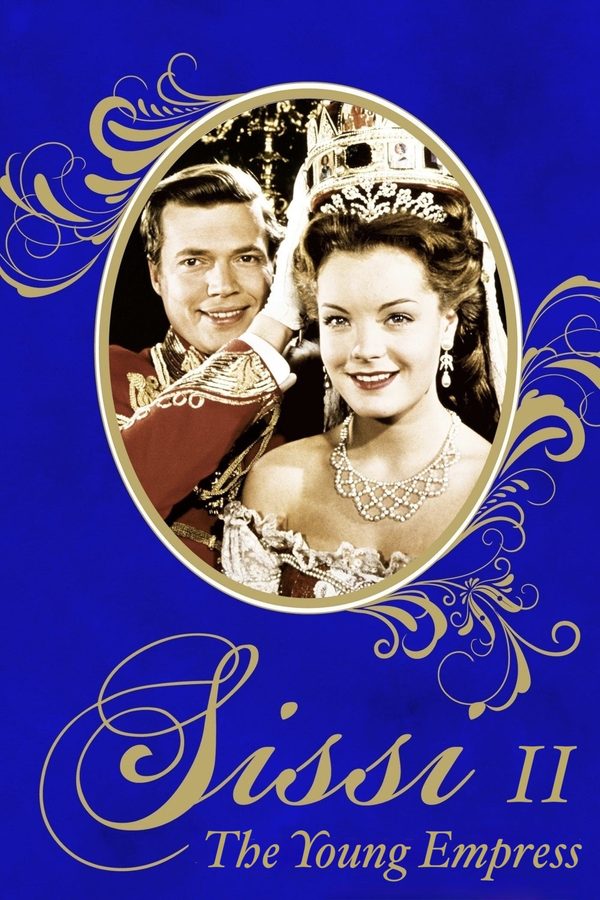
Sissi: The Young Empress (1956) on Netflix
Sissi has become empress of Austria and must learn the court's strict etiquette. Her mother-in-law, Archduchess Sophie, interferes in the emperor's government, and Sissi is drawn to Hungary.
- Netflix3.8/5
- IMDb6.7/108,145 votes
- Rotten TomatoesNot available
Plot summary
Sissi has become the empress of Austria, and the Viennese court follows strict rules of etiquette and protocol. She is learning what her new position requires of her, while her husband, Emperor Franz Joseph, governs the empire. Her mother-in-law, Archduchess Sophie, adheres to the long-established order and interferes in the government of the empire as well as in the imperial family's private life, and Sissi finds her difficult to live with. Sissi's parents, Duke Max and Duchess Ludovika, live in Bavaria. A Hungarian teacher awakens Sissi's affection for Hungary, a country she has never set foot in but feels drawn to.
Cast










- Erich Nikowitzas Erzherzog Franz-Karl
- Hans Ziegleras Dr. Seeburger


Did you know?!Facts and trivia about Sissi: The Young Empress (1956)
Can contain spoilers, watch the movie first.
- The film compresses history, having the Austro-Hungarian Compromise and the imperial couple's coronation as King and Queen of Hungary happen earlier than they did: in reality they took place in 1867, twelve years after Sissi's first daughter Sophie was born.
- Sissi's first daughter, Sophie, died at the age of two during a trip to Hungary, while her second child, Gisela, born one year later, survived the same disease.
- Archduchess Sophie really did remove Sissi's daughters from her custody and take charge of their education, and Elisabeth suffered from it but accepted the decision instead of fleeing the court; her escape from Vienna came later, for the same reasons, after the birth of her son Rudolph.