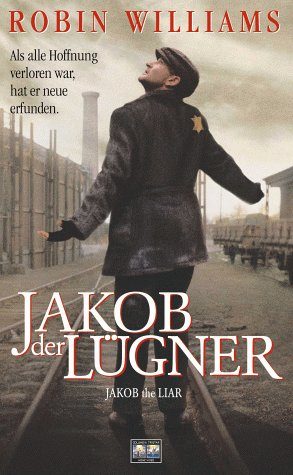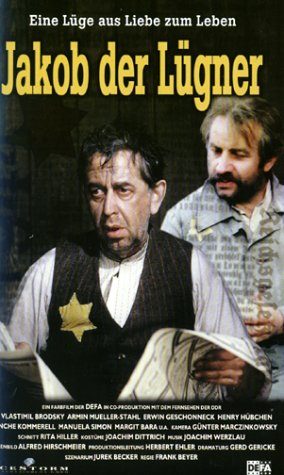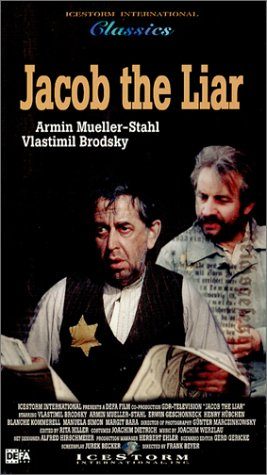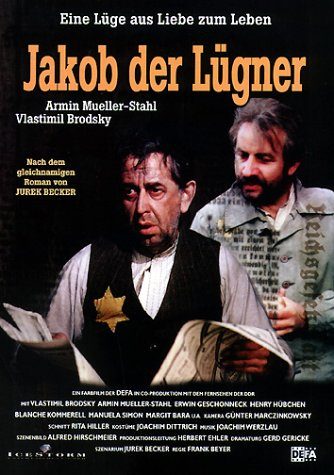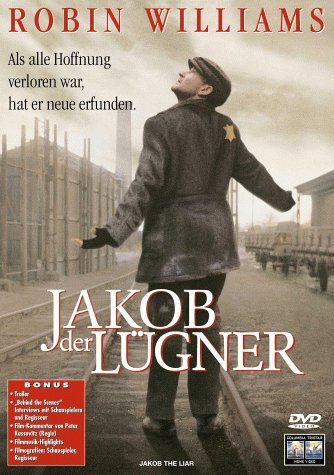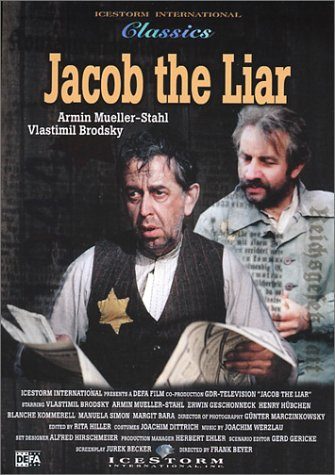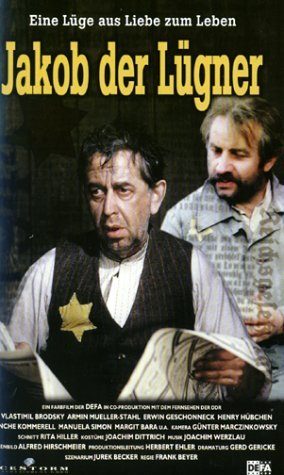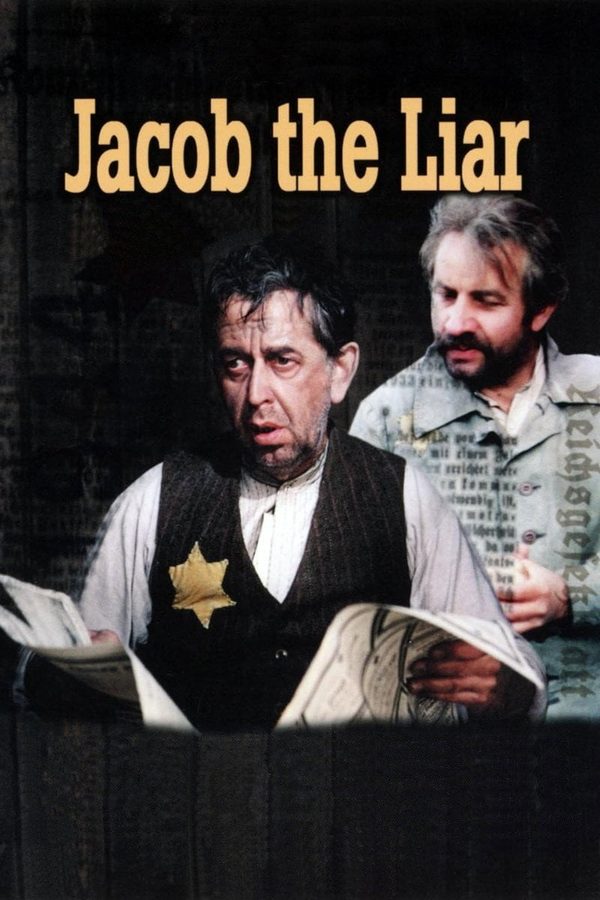
Jacob the Liar (1974) on Netflix
In a ghetto in occupied Poland, Jakob Heym overhears a German radio broadcast of a Soviet advance. To keep his friend Mischa from risking his life, he claims to own a radio.
- Netflix4.3/5
- IMDb7.1/101,563 votes
- Rotten Tomatoes100%
Trailer

Plot summary
Jakob Heym lives in a ghetto in German-occupied Poland in 1944. A watchtower guard, who has the hour wrong, stops him after curfew and orders him to go to a German office. Before he finds the officer in charge, he hears a radio broadcast reporting that the Soviet Army is advancing. The guard lets him go home. The next morning his comrade Mischa prepares to risk his life for a few potatoes, so Jakob passes on the news and says he owns a radio, a crime punishable by death in the ghetto.
Cast


- Manuela Simonas Lina






Did you know?!Facts and trivia about Jacob the Liar (1974)
Can contain spoilers, watch the movie first.
- Frank Beyer's earlier film Trace of Stones was pulled from cinemas in summer 1966; he was blacklisted, barred from working in film and sent to theatre and then to East German state television. Production of Jacob the Liar stopped on 27 July 1966.
- Jacob the Liar was the first East German film ever entered in the Berlin International Film Festival; Vlastimil Brodský won the Silver Bear for Best Actor there, and it remains the only East German picture nominated for the Best Foreign Language Film Oscar.
- West German actor Heinz Rühmann was offered the role of Jakob by ZDF but insisted on playing him in the DEFA version too; Erich Honecker personally rejected him, and Vlastimil Brodský was invited again for the title part.
- Frank Beyer refused to shoot in Poland and filmed the ghetto scenes in the Czechoslovak city of Most, whose historic centre was being demolished; he thought the ruins would make the best ghetto.
- Jurek Becker took the story from his father: a man from the Łódź Ghetto who owned a radio and passed on news from the outside world, risking execution by the Germans.
- Polish actor Jerzy Zelnik was set to play Mischa, but the Polish state film monopoly Film Polski undermined the plan by demanding more details from the East Germans; Henry Hübchen got the role.
- East German officials insisted the script be historically accurate, objecting that in Becker's version the Red Army frees the ghetto; no Jewish ghetto was rescued that way in the war. Permission to start was granted on 22 February.